Posts

Showing posts with the label native plants

Native Plant Art

Image
by Valerie Anderson , staff Pine lily ( Lilium catesbaei ) by Kara Driscoll Florida native plants and ecosystems have long been appreciated and have been memorialized in media. Bartram's Travels document with words and in great detail the natural communities, flora, and fauna of Florida. The Highwaymen painted Florida's landscapes on found material and became legends in the process. Minna Fernald created beautiful watercolors of native plants around the time of WWII. The native plant art scene is being reinvigorated. Longtime artists and FNPS members like Marjorie Shopshire and Cindy Liberton and photographers like Shirley Denton and Paul Rebmann are joined by Kara Driscoll and Mark Kateli . Kara is a fantastic artist, a hidden talent I wasn't aware of until Mark created the Florida Native Plant Art Group on Facebook.
Going Natural: The Importance of Home Composting for Native Plants

Image
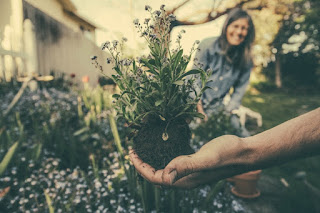
Going Natural: The Importance of Home Composting for Native Plants By Jackie Edwards Native plants aren’t by any means demanding...all they require in order to flourish is a natural environment. No need for chemical fertilizers, irrigation systems or complex programs of management. That’s great news if you’ve planted native species of Central Florida in your yard. The local climate will serve your plants well, and the soil will be matched to their requirements. However, to ensure you maintain optimum soil conditions, especially important with sandy soils typical of the Florida region, it’s a good idea to use home compost. This is the natural, environmentally-friendly way to replenish nutrients. Making environmental sense According to the EPA, 20 to 30 per cent of our waste is  organic material that should be composted . This would keep these materials out of landfills where they release methane into the atmosphere, a potent greenhouse gas that contributes to global war...

Citizens to the Rescue!

Image
Members of the Florida Native Plant Society (FNPS) have sure been busy this hurricane season – rescuing Florida native plant communities – some from the hurricanes but mostly from the bulldozers! From the Panhandle to south Florida, FNPS and our partners have been racing to rescue native plants, and plant communities. As of October 23rd, we have rescued 1,000s of plants in the Panhandle, countless rare Tillandsias in south Florida, and in central Florida more than 3,200 plants from a rare Sandhill parcel with many more collection days still ahead of us. Words cannot adequately express how grateful we are for the outpouring of financial and volunteer support from our members, concerned citizens, and our conservation partners. There are so many to thank and not enough room for here for everyone’s name, but let’s start: our 81 generous financial donors, our 100+ volunteers, and our partners from Oakland Nature Preserve, St. Marks National Wildlife Refuge, Koreshan State Historic Sit...

Wednesday’s Wildflower: Seaside Gentian

Image
Seaside Gentian : Eustoma exultatum Submitted by Beryn Harty, Miami-Dade Chapter, resident of the lower Florida Keys Seaside Gentian, photo by Beryn Harty The beautiful Seaside Gentian, Eustoma exultatum , is a herbaceous wildflower found in brackish to fresh wet coastal areas, and inland in wet prairies. The stunning flowers are usually a shade of light to medium purple with a dark purple center, but some flowers appear almost white with dark purple centers.

Wildflower Portraits: 10 Tips for Taking Great Close-up Images of Native Plants

Image
Submitted by Donna Bollenbach, Suncoast Chapter / Nature Photographer Taking great close-up images of wildflowers is no different than taking great photographs of people, except the wildflowers won’t ever tell you they look “too fat” or “too old” or “too plain.” But, like people portraits, there are a few tips to taking outstanding wildflower portraits: 1. Get close, but be mindful: If it is the flower you are after, get as close as you can without damaging the plant or the habitat. If you want people to be able to identify a plant from your image, be sure to include features that are unique to the species, such as leaves, fruits or seeds. Celestial Lily,  Nemastylis floridana , a rare endemic. 2. Be level: The closer you are to a subject, the less depth-of-field you will achieve. So, position your camera so the lens is parallel with the flower, or other feature of the plant, that you want to be the sharpest. If you have a depth of field preview on your ...

My Habitat Garden: Attracting Butterflies, Bees, Birds, and Other Forms of Life in Zone 9a

Image
By Bill Berthet, Ixia Chapter Garden pathway In the year 2000, with the help of Ron Davis (Butterfly Gardens, Jacksonville) and plants from Edith and Stephen Smith (Shady Oak Butterfly Farm, Brooker) I started to transform my newly purchased property into a Northeast Florida pollinator habitat. The many benefits of gardening include: stress-relief, moderate-intensity exercise, hand strength and dexterity (wearing gloves helps prevent fire ant bites) brain health, risk reduction for dementia, and depression and mental health. Polydamas Swallowtail with chrysalis For me, going through a nasty divorce, gardening was key in bringing more balance to my life. It’s exciting to raise butterflies in your yard. It gives one the opportunity to take witness and share the miracle of metamorphosis with others. Plus, you get a real sense of accomplishment when releasing adult butterflies, increasing their population and diversity in your area. The added bonus is their progeny will vi...

A Passion for Passionflowers in Prose & Poetry

Image
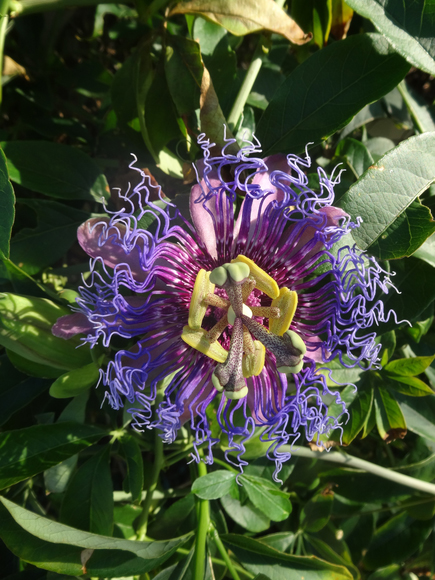
by Devon Higginbotham / Poem by Donna Bollenbach Suncoast Native Plant Society The Passionflower...it looks like it must be from another planet. _D Higginbotham The first time I saw a passion flower, with its bizarre, lavender zigzaggy petals and yellow-star stamens, my immediate thought was it must be from another planet. It looks like no other flower shape — daisy, tulip or rose. Not only is it spectacular to behold but it’s huge, measuring about 4 inches across, and it smells like a sorority house on formal night. I had to have one! Sometimes called the maypop or May apple, this perennial vine is native to Florida and the southeastern United States. It grows well in zones seven to 10, climbing on fences trellises or as a ground cover in sunny locations. It spreads underground, sending out shoots some distance from the parent plant. It is attractive to zebra longwing and gulf fritillary larvae, which keep it in check. Thus, supplying your garden with a steady ...

The Saints of Hillsborough County: The Genus Hypericum

Image
Submitted by Carmel vanHoek Photos courtesy of the Florida Plant Atlas All Saints Of the thirty-one species of the genus Hypericum that have been vouchered for the state of Florida according to the USF Plant Atlas, twelve may be found in Hillsborough County. The genus has been known world-wide since pre-Christian times for its healing properties and each people group has given it common names of their choosing. One of the beliefs of the Romans and Greeks was that the flowers were sent by the gods to provide a holy sacrifice to repel evil, the Greeks naming it Hupereicon and the Romans, Hypericum, meaning perhaps the plant had power over evil. A sacrificial ritual would take place annually during Summer Solstice, also known as Midsummer’s Day, the flowers being thrown on fires to appease the gods. With the advent of Christianity pagan rituals were incorporated with church-based festivals. Thus, because St. John’s birthday was near to Midsummer’s Day, the European species, Hype...