Posts

Showing posts with the label Florida native plant

Wednesday's Wildflower: Southern Beeblossom, Oenothera simulans

Image
Submitted by Jean Evoy, a 30-year veteran of FNPS. She has been active in several chapters including Miami-Dade, Serenoa, and Mangrove. Southern Bee Blossom flower, photo by Jean Evoy Southern Beeblossom is a common wildflower of roadsides, fields, dunes and open woods in Florida.  It used to be called Gaura angustifolia , but a few years ago the evening primrose family underwent extensive revisions and G. angustifolia , was renamed Oenothera simulans along with several other species of that were included in the genus Gaura. Crimson moth larva, J Evoy Southern Beeblossom has slender, branched, hairy stems that may reach six feet. The leaves are reduced on the upper parts of the plant and tiny flowers are found near the ends of wand-like stems. The flowers are white when they open in the evening.    They become pinkish the following day before withering.   As the name beeblossom indicates, the flowers are attractive to many insects, including be...

Wednesday’s Wildflower: Drumheads

Image
Polygala cruciata , Drumheads Text, photos and poetry by Donna Bollenbach. Suncoast Chapter of the Florida Native Plant Society \ Some native flowers are greatly admired, but have yet to make it into our gardens. One is the showy Drumhead, Polygala cruciata. With a few exceptions, Drumheads are found throughout Florida. Like many members of the Polygalaceae or Milkwort family, they like moist, open habitats and are found in moist prairies, the edges of marshes, and wet  pinelands.

Wednesday's Wildflower: Withlacoochee Noddingcap

Image
WITHLACOOCHEE NODDINGCAPS Triphora craigheadii  Luer Orchid Family (Orchidaceae) Submitted by Roger Hammer, Dade Chapter of the Florida Native Plant Society The fragile, succulent stem of this native orchid averages 1"–2" tall with 1–4 broadly ovate, 3/8" leaves that are dark green above and purple below.  Flowers are about 3/16"  wide and last only 2 hours in the morning.  Plants often produce 2 buds that open a week apart. What this means is that you need to be standing in front of plants in bud during June and July at about 10:00 o’clock in the morning and, if you’re lucky, a flower will open. A clue to a bud opening is it stands straight up the day before if opens. Otherwise the buds are nodding. If you miss it, you’ll have one more chance the following week. If you miss that chance, then you’ll have to wait another year.

Short Plants in Sun: Natives for Urban Gardens

Image
Submitted by Richard Brownscombe Reprinted with permission from the April newsletter of the Broward County Chapter of the Florida Native Plant Society  Plants under a foot high are very useful in the urban garden. You can avoid mulch if there are enough small plants to outcompete the weeds. Short native species may be the most interesting in a landscape because they are underutilized and seldom seen. All of the species below prefer full sun and are native to Broward County. Let's jump right into looking at a few species for drier soils and then a few more for average-moisture soils. Sun/Drier Soils We have identified four species for places in your landscape of Sun and Drier Soils. Sun means at least 6 hours including the hot midday sun. All drought-tolerant plants need water, but have evolved ways to retain it or roots to reach for it. Generally, well-drained sandy soils are suitable for these scrub species. Give them deep watering until the roots take hold. Wilting leave...

Wednesday's Wildflower: Buttonbush

Image
Buttonbush, Cephalanthus occidentalis Submitted by Jean Evoy, a 30-year veteran of FNPS. She has been active in several chapters including Miami-Dade, Serenoa, and Mangrove. Dorantes skipper on buttonbush by Jean Evoy Every spring I anxiously await the first sign of buttonbush blossoms.  Buttonbush, Cephalanthus occidentalis , thrives in swamps, sloughs, marshes and along the edges of ponds and lakes  throughout most of North American and the West Indies. Even though the flower heads don’t look anything like modern buttons, their pincushion-like structures make buttonbush an interesting and attractive addition to our Florida landscape. Buttonbush by Jean Evoy Buttonbush is an understory shrub, or small tree with arching branches. It has attractive reddish-brown bark and opposite or whorled leaves.  The intriguing globular inflorescences contain numerous bisexual, sessile, white flowers. The fragrant flowers are 4-lobed, with 4 united sepals, 4 stamens and a ...

Wednesday's Wildflower: Star Anise & Florida Anise

Image
Illicium spp., Anise submitted by Tom Palmer, Heartland Chapter Florida has two native species of anise that look quite different and are found in very different regions of the state. Both bloom in spring. Star Anise Star Anise,  Illicium parviflorum ,   Photo by Tom Palmer The Yellow Anise Tree/Star  Anise, Illicium parviflorum , is found in hydric hammocks in a handful of Central Florida counties from Marion to Polk. It reportedly once occurred in Georgia, but has been extirpated. While classified as endangered in Florida, it is locally common in places such as the Marion Creek Basin in northeast Polk County.The type specimen was collected in 1799 in Marion County.

Eastern bluestar

Image
EASTERN BLUESTAR Amsonia tabernaemontana  Walter Dogbane Family (Apocynaceae) Submitted by Roger Hammer Eastern Bluestar, Rover Hammer, roadside ditch along SR65 near Apalachicola. This perennial wildflower reaches 3' tall with smooth stems and lanceolate to elliptic leaves from 3–4" long and ¾"­–1" wide (the uppermost leaves are sessile). It can form large, multi-stemmed clumps and is easy to see when in flower. Pale blue, ¾", star-shaped flowers are in terminal clusters. Flowering season begins in March and lasts into August so look for it in the floodplain forests of the Florida panhandle east to Columbia, Alachua, and Levy Counties. It ranges across the eastern United States to Texas, Oklahoma, and Kansas, and is on its southern range extension in Florida.

Wednesday's Wildflower Whitemouth Dayflower

Image
Commelina erecta submitted by Beryn Harty, Miami Dade Chapter Commelina erecta , photo by Beryn Harty, Roadside, Ramrod Key, FL Whitemouth Dayflower, Commelina erecta,  is a prostrate, herbaceous, perennial wildflower with very showy morning blooms which may bloom throughout the year. The flower is  quarter sized, bright blue, with two larger ear-shaped petals and a small white lower petal (the mouth).

Wednesday's Wildflower: Fewflower Milkweed

Image
Asclepias lanceolata submitted by Lynn Sweetay, Palm Beach Chapter A. lanceolata is tall with a herbaceous stem that does not branch. Leaves are very narrow and lanceolate. Flowers are orange to red and yellow. Flowering occurs in early summer. It is a larval host plant for monarch and queen butterflies and a possible larval host for soldier butterflies as well as providing nectar for monarch and other butterflies and insects.

Wednesday's Wildflower: Scrub Lupine

Image
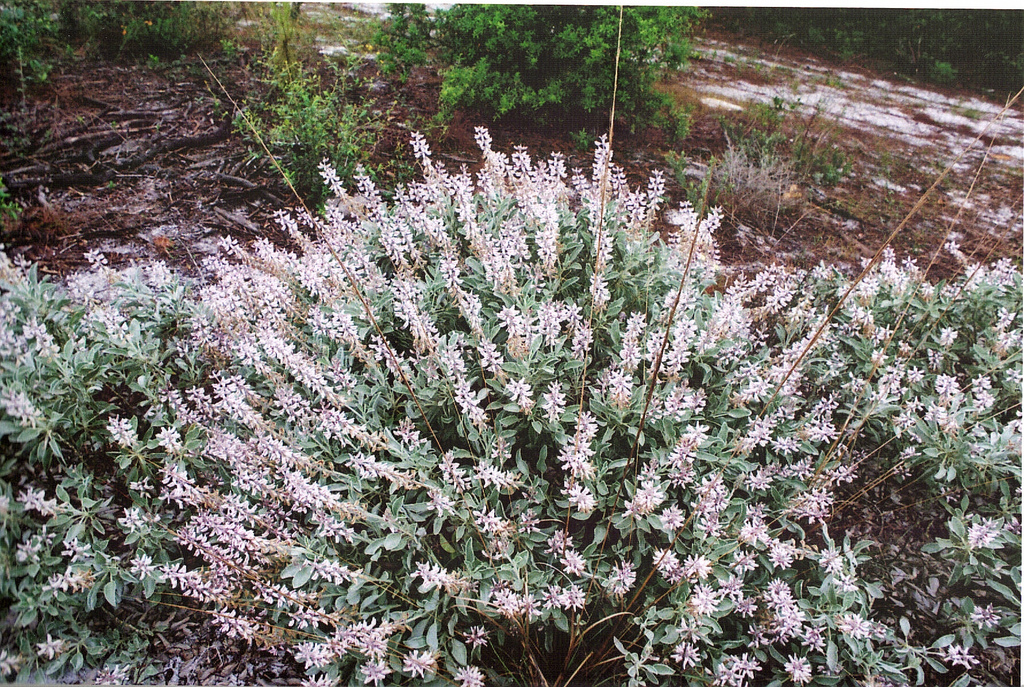
McFarlin’s Lupine/Scrub Lupine,  Lupinus westianus var. aridorum / Lupinus aridorium Submitted by Tom Palmer, Hernando Chapter Scrub Lupine, photo by Tom Palmer This pink-flowered endemic wildflower blooms in spring in a decreasing number of locations on the Winter Haven and Mt. Dora ridges in Polk and  Orange counties.  It is a federally listed endangered species, and unlike many scrub species, it is  unknown within the Lake Wales Ridge.  Although this plant was first proposed to be considered a separate species by James Brigham McFarlin in the 1930s, it was not formally described until 1982 by John Beckner. It was later reclassified as a variety of Lupinus westianus by Duane Isley, but a current genetic evaluation of Florida lupines reportedly may result in changes in the nomenclature that may restore it to full species status. Scrub lupines are easily identified by pink blossoms as well as the absence of stipules, which will L. diffusus...

Jack-in-the-Pulpit, Arisaema triphyllum

Image
Submitted by Tom Palmer, Hernando Chapter . Edited by Valerie Anderson Jack-in-the-Pulpit, photo by Tom Palmer Jack-in-the-Pulpit ( Arisaema triphyllum ) emerges in floodplain forests in most of Florida at the beginning of spring. The plant’s Latin name refers to its three prominent leaves that spread above the spathe that is the “pulpit” from which the common name (also known as Parson-in-the-Pulpit) derives. Purple splotched spathe. Photo by Tom Palmer The spathe ranges from green to purple. The plant also includes a cluster of red berries that ripen later in the year. This plant is widespread, growing all over the Eastern United States and as far north as Nova Scotia. However the plant is not uniformly distributed and sometimes may be absent or infrequent in suitable habitat. Arisaema triphyllum was once divided into two species ( A. triphyllum and A. acuminatum ) based on morphological differences described by Small and others. It was originally desc...

Wednesday’s Wildflower: American White Water Lily

Image
Nymphaea odorata Submitted by Lynn Sweetay, Palm Beach Chapter White Water Lilies, Linda Sweetay, Palm Beach County  One of my very favorite wild flowers is Nymphaea odorata, commonly known as the American White Water Lily.  As the name suggests this is a floating aquatic plant (Nymphaea = water sprite; odorata =fragrance) with large, fragrant, white or pink flowers and flat, round, floating leaves.  The leaves are bright green above and purplish beneath.  It is native to Eastern North America from Florida to Canada .  It can be found in still shallow water (5-7 ft deep) with mucky bottoms. The flowers open in the morning and remain open until around noon .  There is one flower to a stem, each flower is 2 to 6 inches wide with many rows of white petals.  Petals are ¾ to 4 inches long and pointed at the tip. There can be more than 25 petals to one flower! White Water Lilies, Linda Sweetay, Palm Beach County  ...

Wednesday's Wildflower: Blackberries

Image
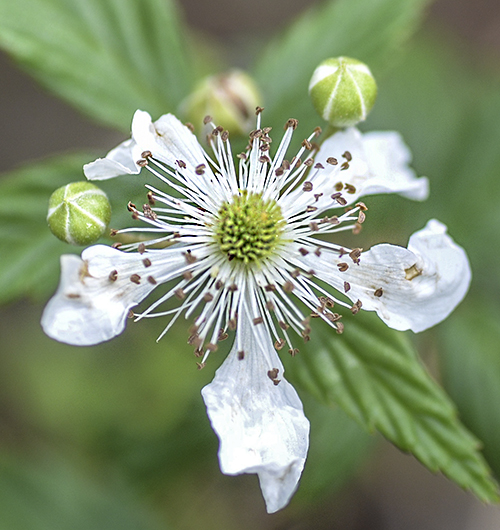
Native Blackberries, Rubus spp.  Submitted by Tom Palmer, Hernando Chapter Blackberry Flower, Rubus spp. Tom Palmer, Hernando Chapter The lovely white blooms of Florida’s various species of native blackberries (Rubus sp.) in late winter and early spring offer plenty of food for wildlife ranging from Florida black bears to songbirds in late spring. Bee visiting a Dewberry Flower, Photo by Donna Bollenbach The flowers attract bees and other pollinators. Wild Blackberries photo by Donna Bollenbach Blackberries are common in dense thorny patches along roadsides and in natural areas throughout north and central Florida. The fruit is composed of drupelets that vary in the sizes of the drupelets and the size of the fruits. Although fruiting in central Florida typically occurs in late May or early June, I have observed some fruiting as early as late March. For people, the flowers offer the promise of cobblers and pies at Fourth of July pic...

Wednesday's Wildflower: Yellow Jessamine

Image
I could not think of a better native wildflower to feature in February than Yellow Jessamine,  Gelsemium sempervirens  . After reading Roger Hammer's sinister portrayal of this "pretty and evil” native, your appreciation for its lovely flower and fragrance will be restored by the poem “Yellow Jessamine” written by Constance Fenimore Woolson in 1874. Thank you to Peg Urban, who brought this poem to my attention when she remembered it from a past issue of the Palmetto .    CAROLINA JESSAMINE Gelsemium sempervirens (L.) W.T. Aiton Gelsemium Family (Gelsemiaceae) text and photos by Roger Hammer, Dade Chapter Carolina Jessamine, by Roger Hammer, Dade Chapter This twining vine has stems to 20' long with light green, lanceolate leaves from 1"–3" long and ½"–¾" wide. The fragrant, trumpet-shaped flowers are about 1½" long and are typically present from January into April. Look for it in deciduous forests south...

Wednesday's Wildflower: Golden Club

Image
Golden Club, Orontium aquaticum L. Text and Photos by Donna Bollenbach, Suncoast Chapter Golden Club, Alderman Ford Preserve, Hillsborough County photo by Donna Bollenbach Golden Club is an aquatic plant that grows from stout rhizomes in shallow streams, ponds and swamps throughout most of Florida, and much of the eastern United States, and on the coastal plains The Waxy leaves repel water. Photo by Donna Bollenbach of Southeast Texas.  Typical of plants in the family Araceae, its tiny flowers are closely arranged around a fleshy stem, forming a yellow spadix, thus the common name “Golden Club.” It’s other common name “Never Wet”, refers to its large velvety bluish green leaves with a waxy coating that repels water .   Its Latin generic name derives from a plant that grows in the Orontes River of Syria. Golden Club is a member of the arum family, and related to Jack-in-the pulpit, skunk cabbage and the garden calla lily. It is the only arum ...

Wednesday Wildflowers: Sundial and Skyblue Lupines

Image
Today's Wednesday's Wildflower features two species of Lupine, the Sandhill Lupine, submitted by Roger Hammer, and the Sundial Lupine, submitted by Bill Berthet. Edited by Valerie Anderson. Sandhill Lupine,  Lupinus cumulicola                                                          Text and photo by Roger Hammer, Dade Chapter Sandhill Lupine, Lupinus cumulicola , by Roger Hammer From January to May each year the white sand scrub on the Lake Wales Ridge in Lake, Osceola, Polk, and Highlands Counties are adorned with the cheery blue flowers of the Florida endemic skyblue lupine (pronounced LOO-PIN). Some botanists consider it a synonym of Lupinus diffusus but others argue that L. diffusus differs by its habitat, range, prostrate to decumbent stems, orbicular-reniform (kidney-shaped) standard, and a nearly straight beak on ...

Wednesday's Wildflower: Bahama Senna

Image
Senna mexicana var. chapmanii Submitted by Beryn Harty, Miami-Dade Chapter, resident of the lower Florida Keys Photo by Beryn Harty in a refuge area of Lower Florida Keys Bahama Senna is a small shrub, or sprawling groundcover with showy yellow flowers that bloom year-round in its natural, southern range. The bright yellow, five petal flowers, about the size of a US quarter, bloom the heaviest in the fall and winter.  Photo by Beryn Harty in a refuge area of Lower Florida Keys Bahama Senna is the host plant for Cloudless Sulphur, Orange Barred Sulphur, and Sleepy  Orange Butterflies. Its preferred habitat is pine rocklands and rockland hammock edges in moist, well-drained limestone soils, typically in full sun to light shade.     While listed as threatened in the state of Florida, it is easy to find and grow, stocked by many native nurseries, and can be grown from seed.   Family Name: Fabaceae Genus/Species: Senna mexicana var...