Posts

Showing posts with the label Florida Native Plant Society

The Florida Wildflower Foundation and the Florida Native Plant Society Forge a Formal Partnership
Image
Photo by of Leavenworth's Tickseed, Coreopsis leavenworthii , in Lake Harney Wilderness Area, Seminole County, by iNaturalist user brent313, CC BY-NC 4.0 Two of Florida’s leading native habitat conservation organizations have strengthened their partnership in order to collaborate on future projects. The Florida Wildflower Foundation (FWF) and Florida Native Plant Society (FNPS) formalized their longtime partnership by signing an agreement on June 6 to work in tandem for the good of native, natural Florida. The organizations will continue to pursue their own goals while collaborating on projects compatible with their missions. FWF protects, connects and expands native habitat corridors across Florida through education, planting, conservation and research projects. FNPS, which has 34 chapters throughout the state, preserves, conserves and restores native plants and native plant communities. The organizations will assess opportunities to team on such initiatives as nat...

Summer Farewell (Dalea pinnata) - a Titan among nectar plants for NE Florida Pollinators in September and October

Image
When scheduling Butterfly Holiday trips to all parts of the world, I always leave open the months of September and October. During this time, the greatest diversity and number of butterflies and many other N.E. Florida pollinators are attracted to  flowering plants in the Genera: Carphephorus , Liatris , Dalea , Vaccinium , Dioda , Elephantopus , Bidens , Lachnanthes , and  others. Southern Dogface on Liatris pauciflora When conditions are right, in the dry pinelands and sand hill areas in Julington-Durbin Preserve, Ralph E Simmons and Jennings State Forests, acres of Summer Farewell ( Dalea pinnata ) can be in bloom attracting multitudes of butterflies and other Northeast Florida pollinators. Summer Farewell ( Dalea pinnata ) There are eight native Dalea species growing in Florida. Three are vouchered in Northeast Florida, D. carnea , D. carnea var. albida , and D. pinnata , with D. pinnata being the most common. Summer Farewell ( Dale...

Join the Pawpaw Chapter of FNPS on an exploration of Longfleaf Pine Sandhill in the Ocala National Forest

Image
All FNPS members are invited to join the Pawpaw chapter of FNPS, Saturday, October 14, 2017, for an  all-day,  driving/walking, field trip in the Ocala National Forest!   Dr. Susan Carr will guide us, as we explore 1- 3 year old, fire-managed, longleaf pine sandhill areas near Salt Springs. Dr. Susan Carr    Trip participants should wear field clothes, and bring their own lunch, as well as drinking water, insect repellent, and Florida-appropriate weather gear.   Dr. Susan Carr and David Anderson Participants should expect to travel over several miles of rough dusty forest roads. The reward of possibly spotting a fox squirrel, RCW nest trees, and of course, great understory of plant diversity in Fall bloom, makes it worth the effort!  For more details, FNPS members should contact trip coordinator, Sonya Guidry: guidry.sonya@gmail.com

Why your Florida garden needs Yucca plants, and how to grow them

Image
Yucca plants are evergreen plants with interesting, usually spiky, leaves that bloom into bunches of flowers. There are  over 20 species of yucca  and three are native to Florida. These are the Spanish Bayonet, Moundlily Yucca, and Adam's needle. Spanish bayonet (Yucca aloifolia)  Photo credit: Shirley Denton Growing yucca plants in Florida is a great way to encourage indigenous plants to thrive, while benefiting birds and pollinators. If you grow native Florida plants, they also require less TLC because they're in their natural environment. Here’s what you need to know about Yucca plants. The three species of Yucca plant that are indigenous to Florida are beautiful ways to encourage a more creative and healthy garden. Here's how to identify them so you can choose the one that feels perfect for your garden and needs. 1. Spanish Bayonet (Spanish Dagger) This evergreen plant is marked by sharp tips and two-foot leaves. It can reach up to 20 feet in he...
Image
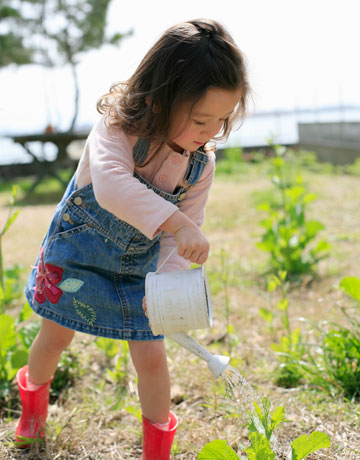
Stimulate the Five Senses through Your Garden Submitted by Jackie Edwards, Guest Blogger  “Why try to explain miracles to your kids when you can just have them plant a garden”  (Robert Brault).  Image courtesy of www.blogthecoast.com Gardening provides many miraculous benefits for a child’s development including fine motor skills, math skills, responsibility, and science. Children that spend time outside are also happier as the landscape helps to reduce stress, lower blood pressure, and increase attention. When combining gardening with the use of all senses, you can further increase the benefits.

Wednesday's Wildflower: Tennessee Leafcup

Image
TENNESSEE LEAFCUP,   Polymnia laevigata  Beadle Aster Family (Asteraceae) Submitted by Roger Hammer Polymnia laevigata,  photo by Roger Hammer The lower leaves of this species reach 6"–12" long and 4"–6" wide and are deeply and raggedly cut with pointed lobes, reducing in size up the stem with few or no lobes. The 3'–6' stems are glabrous (smooth). The flower heads are about ½" wide, subtended by a whorl of leafy bracts, and with 3-toothed ray florets and male disk florets.

Wednesday's Wildflower: Atlantic Pigeonwings

Image
ATLANTIC PIGEONWINGS,  Clitoria mariana  L. Pea Family (Fabaceae) Submitted by Roger Hammer, Dade Chapter The upper leaves of this vining species have 3 ovate to ovate-lanceolate leaflets that reach up to 2½" long and ¾" wide. The violet or pink flowers reach 2" long. A similar, related, endemic species ( Clitoria fragrans ) has narrower leaflets, sweetly fragrant flowers, and is known only from the Lake Wales Ridge in Lake, Orange, Polk, and Highlands Counties.

In Touch: Teaching children to value and respect the wilderness and the creatures that live there.

Image
Submitted by by Steve Franklin, Guest blogger I feel certain that, like me, most of you can recall more than one occasion when you didn’t explain your thoughts about a subject as well as know you can. I’m currently experiencing one of those moments. On the day before Earth Day, a few other volunteers and I conducted an educational field trip event for the first graders from Lake Alfred Elementary School. My portion of the program involved taking them for a short hike on one of the trails at Mackay Gardens and Lakeside Preserve, which is located in the City of Lake Alfred. Throughout the hike, I was discussing map reading, hiking safety, trail etiquette, and what it means to be a good steward of the land. However, I’m not certain that I did a good enough job of explaining the importance of being thoughtful and considerate of others when we’re out to enjoy the clean, wholesome fun that nature-related activities provide. Did I instill in them a new appreciation of nature and a co...

Wednesday’s Wildflower: Seaside Gentian

Image
Seaside Gentian : Eustoma exultatum Submitted by Beryn Harty, Miami-Dade Chapter, resident of the lower Florida Keys Seaside Gentian, photo by Beryn Harty The beautiful Seaside Gentian, Eustoma exultatum , is a herbaceous wildflower found in brackish to fresh wet coastal areas, and inland in wet prairies. The stunning flowers are usually a shade of light to medium purple with a dark purple center, but some flowers appear almost white with dark purple centers.

Wednesday's Wildflower: Southern Beeblossom, Oenothera simulans

Image
Submitted by Jean Evoy, a 30-year veteran of FNPS. She has been active in several chapters including Miami-Dade, Serenoa, and Mangrove. Southern Bee Blossom flower, photo by Jean Evoy Southern Beeblossom is a common wildflower of roadsides, fields, dunes and open woods in Florida.  It used to be called Gaura angustifolia , but a few years ago the evening primrose family underwent extensive revisions and G. angustifolia , was renamed Oenothera simulans along with several other species of that were included in the genus Gaura. Crimson moth larva, J Evoy Southern Beeblossom has slender, branched, hairy stems that may reach six feet. The leaves are reduced on the upper parts of the plant and tiny flowers are found near the ends of wand-like stems. The flowers are white when they open in the evening.    They become pinkish the following day before withering.   As the name beeblossom indicates, the flowers are attractive to many insects, including be...

Wednesday’s Wildflower: Drumheads

Image
Polygala cruciata , Drumheads Text, photos and poetry by Donna Bollenbach. Suncoast Chapter of the Florida Native Plant Society \ Some native flowers are greatly admired, but have yet to make it into our gardens. One is the showy Drumhead, Polygala cruciata. With a few exceptions, Drumheads are found throughout Florida. Like many members of the Polygalaceae or Milkwort family, they like moist, open habitats and are found in moist prairies, the edges of marshes, and wet  pinelands.

Methods to Remember: Concrete Steps for Teaching Conservation to Kids

Image
Submitted by Jackie Edwards, Guest Blogger image: pixnio.com Now more than ever, environmental conservation is a hot button issue. Despite the fact that it may feel like an individual contribution to cleaning up the environment is insignificant, enough individuals can effectively become a collective. This means that our kids have also got to be taught how to conserve their environment and care for their local plantlife. For kids it may be difficult to understand environmental conservation and why it is so important, but with these simple steps you can make it fun, simple and engaging while they're interacting with your garden or the local flora.

Wednesday's Wildflower: Tickseed, Coreopsis spp.

Image
Tickseed, Coreopsis spp. Submitted by Carol Mahler,  Serenoa Chapter of Florida Native Plant Society, edited by Valerie Anderson Coreopsis , photo by Carol Mahler Although the orange blossom, Citra sinensis,  was named our state flower in 1909, the legislature designated the genus Coreopsis as our state wildflower in 1991. According to the Netstate , the story began in 1963 as the Florida Department of Transportation (FDOT) finished a project near Tallahassee that required sod. The sod field had previously been a pasture planted in red clover—a winter forage for cattle. When the clover blossomed in the new grass, people complimented FDOT for their “highway beautification.” That praise inspired FDOT to plant native wildflowers along Florida’s highways . A partnership with the Florida Federation of Garden Clubs funded a research project at Florida Atlantic University. The results recommended many varieties of Coreopsis, and the Federation lobbied for Coreopsis ...

Wednesday's Wildflower: Withlacoochee Noddingcap

Image
WITHLACOOCHEE NODDINGCAPS Triphora craigheadii  Luer Orchid Family (Orchidaceae) Submitted by Roger Hammer, Dade Chapter of the Florida Native Plant Society The fragile, succulent stem of this native orchid averages 1"–2" tall with 1–4 broadly ovate, 3/8" leaves that are dark green above and purple below.  Flowers are about 3/16"  wide and last only 2 hours in the morning.  Plants often produce 2 buds that open a week apart. What this means is that you need to be standing in front of plants in bud during June and July at about 10:00 o’clock in the morning and, if you’re lucky, a flower will open. A clue to a bud opening is it stands straight up the day before if opens. Otherwise the buds are nodding. If you miss it, you’ll have one more chance the following week. If you miss that chance, then you’ll have to wait another year.

Wednesday's Wildflower: Coastal Groundcherry

Image
Coastal Groundcherry, Physalis augustifolia submitted by Carol Tebay, Longleaf Pine Chapter I spent my first winter on the Intercoastal Waterway at Big Lagoon in Escambia County getting to know some of the plants in this scrub dune habitat.  I spotted one plant I couldn't identify. Then, in April, while searching the internet to identify some tracks I’d found in the sand, I came across a list of plants that beach mice depend on for food.  I’d recently spotted one of them, the Coastal Groundcherry, Physalis angustifolia (narrow-leaved).  In this harsh, coastal environment, where I tower over many mature runner oaks, Coastal Groundcherry hugs the ground. Just the right height for a tiny beach mouse. The Groundcherry is a member of the nightshade (Solanaceae) family. Photo by Carol Tebay According to the Atlas of Florida Plants , there are ten native species of Physalis growing in Florida.   While Coastal Groundcherry seems to prefer Gulf Coast counties...

Short Plants in Sun: Natives for Urban Gardens

Image
Submitted by Richard Brownscombe Reprinted with permission from the April newsletter of the Broward County Chapter of the Florida Native Plant Society  Plants under a foot high are very useful in the urban garden. You can avoid mulch if there are enough small plants to outcompete the weeds. Short native species may be the most interesting in a landscape because they are underutilized and seldom seen. All of the species below prefer full sun and are native to Broward County. Let's jump right into looking at a few species for drier soils and then a few more for average-moisture soils. Sun/Drier Soils We have identified four species for places in your landscape of Sun and Drier Soils. Sun means at least 6 hours including the hot midday sun. All drought-tolerant plants need water, but have evolved ways to retain it or roots to reach for it. Generally, well-drained sandy soils are suitable for these scrub species. Give them deep watering until the roots take hold. Wilting leave...

Wednesday's Wildflower: Buttonbush

Image
Buttonbush, Cephalanthus occidentalis Submitted by Jean Evoy, a 30-year veteran of FNPS. She has been active in several chapters including Miami-Dade, Serenoa, and Mangrove. Dorantes skipper on buttonbush by Jean Evoy Every spring I anxiously await the first sign of buttonbush blossoms.  Buttonbush, Cephalanthus occidentalis , thrives in swamps, sloughs, marshes and along the edges of ponds and lakes  throughout most of North American and the West Indies. Even though the flower heads don’t look anything like modern buttons, their pincushion-like structures make buttonbush an interesting and attractive addition to our Florida landscape. Buttonbush by Jean Evoy Buttonbush is an understory shrub, or small tree with arching branches. It has attractive reddish-brown bark and opposite or whorled leaves.  The intriguing globular inflorescences contain numerous bisexual, sessile, white flowers. The fragrant flowers are 4-lobed, with 4 united sepals, 4 stamens and a ...
Image
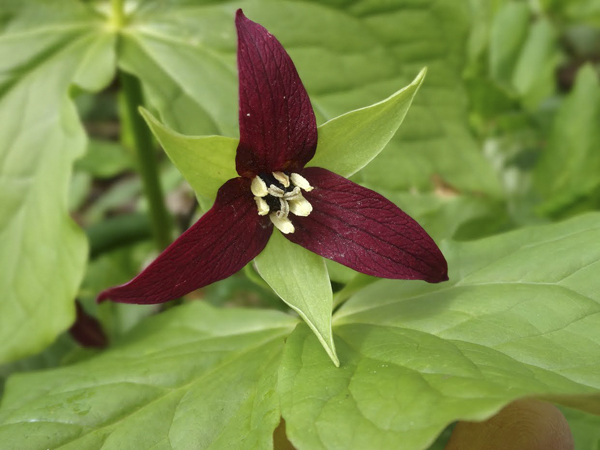
Seeing Old Friends for the Very First Time Submitted by Devon Higginbotham, Indigo Travel Company Purple Wakerobin, Trillium erectum, Blue Ridge Mountains I remember visiting the Appalachians for the first time.  It was 1971 and with my new driver’s license firmly in hand, I accepted an invite from my older sister and her girlfriend, Francie, to go camping in Vogel State Park in north Georgia.

Wednesday's Wildflower: Star Anise & Florida Anise

Image
Illicium spp., Anise submitted by Tom Palmer, Heartland Chapter Florida has two native species of anise that look quite different and are found in very different regions of the state. Both bloom in spring. Star Anise Star Anise,  Illicium parviflorum ,   Photo by Tom Palmer The Yellow Anise Tree/Star  Anise, Illicium parviflorum , is found in hydric hammocks in a handful of Central Florida counties from Marion to Polk. It reportedly once occurred in Georgia, but has been extirpated. While classified as endangered in Florida, it is locally common in places such as the Marion Creek Basin in northeast Polk County.The type specimen was collected in 1799 in Marion County.