Posts

Showing posts with the label biodiversity

The Importance of Native Plants, Part 2
Image
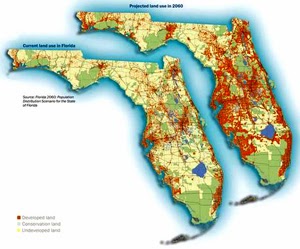
The following article, which features Dr. Doug Tallamy's book, Bringing Nature Home , was submitted by Karina Veaudry, FNPS Landscape Committee Chair. Excerpts of Tallamy’s original text were reprinted with his permission. For part 1 of the article, click HERE . Landuse in Florida today and predictions for 2060; the rust color depicts developed land, green is conservation and yellow is undeveloped. Your Role in Building Biological Corridors: Networks for Life Throughout the U.S., we have fragmented the habitats that support biodiversity by the way we have landscaped our cities, suburbs, and farmland. This is a problem because isolated habitats cannot sustain themselves or support populations large enough to survive normal environmental stresses. We can reconnect viable habitats by expanding existing greenways, building riparian corridors, and by changing the landscaping paradigm that dominates our yards and corporate landscapes. Replacing half of our lawns (areas that are e...

The Importance of Native Plants, Part 1

Image
The following article features Dr. Doug Tallamy's book, Bringing Nature Home , was submitted by Karina Veaudry, FNPS Landscape Committee Chair. Excerpts of Tallamy’s original text were reprinted with his permission. The Need to Plant Natives in (sub)Urban Landscapes As development and subsequent habitat destruction accelerate, there are increasing pressures on wildlife populations. But there is an important and simple step toward reversing this alarming trend: Everyone with access to a patch of earth can make a significant contribution toward sustaining biodiversity. There is an unbreakable link between native plant species and native wildlife - native insects cannot, or will not, eat non-native plants. When native plants disappear, so do native insects; subsequently, the food source for birds and other animals is dramatically reduced. In many parts of the United States, habitat destruction has been so extensive that local wildlife populations have entered a state of crisis and ...

Film premier: Florida Wildlife Corridor Expedition Documentary

Image
The Wildlife Corridor By Ed Murawski, FNPS Heartland Chapter Florida Wildlife Corridor Expedition: Everglades to Okefenokee Documentary Film  On Sunday March 3, 2013, the Heartland Chapter attended the Tampa premiere of the documentary film, Florida Wildlife Corridor Expedition: Everglades to Okefenokee, produced by Elam Stoltzfus. This film documented the 100 day, 1,000 mile trek across the state of Florida from the southern edge of the Everglades to the Okefenokee National Wildlife Refuge at the Florida-Georgia border. The journey was documented by photographer Carlton Ward Jr., filmmaker Elam Stoltzfus, conservationist Mallory Lykes Dimmitt, and bear biologist Joe Guthrie. The expedition team hiked, paddled, and rode horseback along their journey. The premier took place at the Cotanchobee Park next to the Tampa Bay History Center.  Over 500 attendees braved the very cold and windy conditions to be the first to see this wonderful film.  I have to say, ...

Are Natives the Answer? Professor Cregg, Why Are You Asking?

Image
Introduction by Laurie Sheldon Article by Taryn Evans Background The Seattle Department of Planning and Development is focused on long-term green priorities (water and material conservation, sustainable transportation and healthy landscapes) and working on a draft of some new "Green Code Provisions." These provisions were presented to the public on August 13, 2012. Comments and questions were encouraged. The "Healthy Landscapes" component of the "Green Code Provisions" outlines the following initiatives: Invasive Species and Native Vegetation (Regional Plan) Who it Applies To: All new vegetated landscapes, or those being replaced Requirements: • Existing invasive plant species shall be removed and no invasive species planted. • 75% of all new plantings will be native to Western Washington. • A vegetation plan must be submitted for review. • Existing native plant species shall be protected whenever possible. Code Impacted: Code appropriate...

Green Roofs and Native Plants

Image
One of the first interesting observations on a newly installed green roof is the plant preference of insects and pollinators. "Biodiversity: Higher Taxa Variations, Green Roofs and Native Plants"   A guest post by KEVIN SONGER We always use many native Florida species on our green roof plantings.  We also use non-native ‘Florida Friendl y ’ plants, non-invasive landscape plants, and food plants.  Our green roof designs are centered around four or five main native plant families, Asteraceae , Poaceae , Fabaceae, Lamiaceae , and Solanaceae , if the green roof has a food garden or ethnobotanical component (though I love our native Solanaceae weeds too). Of course invasive and exotic species with aggressive growth tendencies need be avoided as plants growing on a roof are situated high in the air, their seeds and plant DNA subject to being carried by the wind, picked up and redeposited elsewhere by birds, collected and transported downstream by stormwater . ...

Native Plants Push Back!

Image
Well shiver me timbers, mates, our boat has been rocked! Doubters and naysayers have been out there in media land with some ideas that we just might have something to say about. Or about which we might have something to say. You can choose. A book entitled Plant Driven Design, by Scott and Lauren Springer Ogden has recently been reviewed by one of our friends at the Garden Rant . A lovely book, with some lovely ideas in it.  I read the book when it first came out, and the review had me breaking out in sweat for a second time. I quote: Coming in for even more bashing are native plant purists, and their claims that native plants grow better than nonnatives, to which the Ogdens reply simply (and accurately) that "Native plants cannot be declared inherently better, either practically or aesthetically." OK. First of all, how many times have you read right here that the plant must be fitted correctly to the place.  You can't grow sea oats in a swamp. We admit it. Practic...