Posts

Showing posts with the label scrub habitat

Care to help a rare plant species with your loppers and hand saw?

Image
Etoniah Rosemary ( Conradina etonia ) is a narrow range endemic mint species only known from Etoniah Creek State Forest and private land adjacent to the Forest (Figure 1). Dunn’s Creek Rosemary ( C. cygniflora ), an additional narrow range endemic mint species, was once considered the same species but further research determined it is a distinct species which occurs in roughly the same region. Figure 1. Etoniah Rosemary ( Conradina etonia ) In areas where fire has been excluded populations of these mint species are declining. These populations would benefit from small-scale hand removal of shrubs near individual plants in areas that will not be burned or mowed. This involves cutting and removing sapling woody species like Sand Live and Laurel Oaks, Crooked Wood, etc. with loppers, hand saws, Root Jacks, etc.. This work is to be done in Florida scrub in spring, so will be sunny, windy, and perhaps cold or hot and dry. Volunteers will need to bring sunglasses/eye protectio...
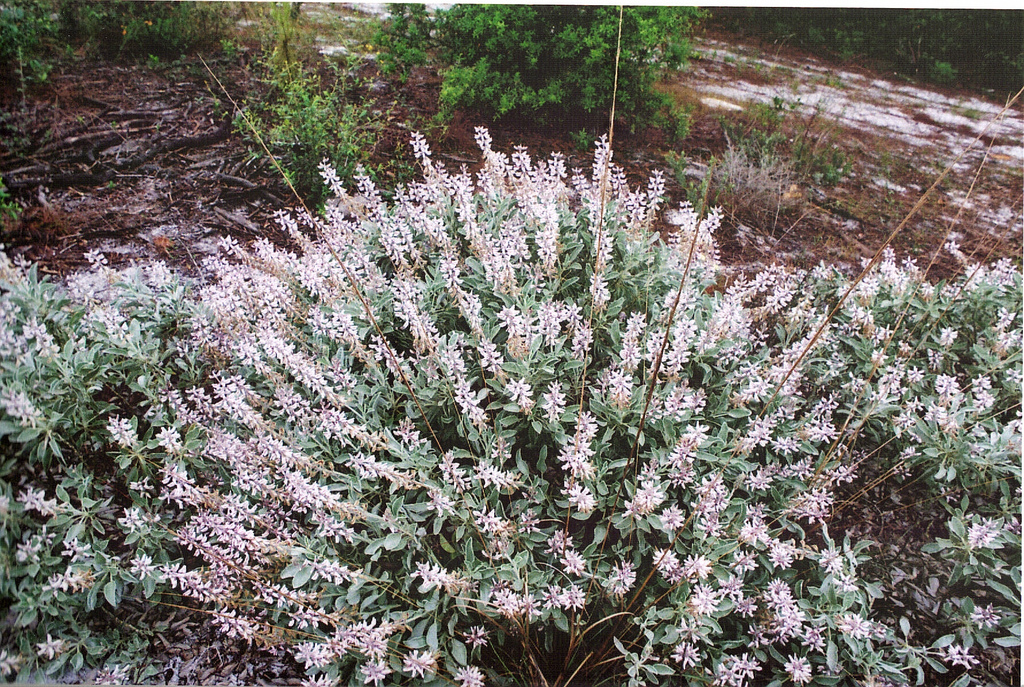
Wednesday's Wildflower: Scrub Lupine

Image
McFarlin’s Lupine/Scrub Lupine,  Lupinus westianus var. aridorum / Lupinus aridorium Submitted by Tom Palmer, Hernando Chapter Scrub Lupine, photo by Tom Palmer This pink-flowered endemic wildflower blooms in spring in a decreasing number of locations on the Winter Haven and Mt. Dora ridges in Polk and  Orange counties.  It is a federally listed endangered species, and unlike many scrub species, it is  unknown within the Lake Wales Ridge.  Although this plant was first proposed to be considered a separate species by James Brigham McFarlin in the 1930s, it was not formally described until 1982 by John Beckner. It was later reclassified as a variety of Lupinus westianus by Duane Isley, but a current genetic evaluation of Florida lupines reportedly may result in changes in the nomenclature that may restore it to full species status. Scrub lupines are easily identified by pink blossoms as well as the absence of stipules, which will L. diffusus...

LICHENS – A TAPESTRY OF LIFE

Image
by Donna Bollenbach The tiny moss has been the theme of many a gifted poet; and even the despised mushroom has called forth classic works in its praise. But the Lichens, which stain every rock, and clothe every tree, which form:                           Nature’s livery o’er the globe Where’er her wonders range Have been almost universally neglected, nay despised. Lauder Lindsay Christmas Lichen on a fallen tree, Florida.  PIONEERS Imagine our continent after the last ice age: Glaciers cut deep gorges in the land and miles of granite boulders, silt and the bones cover the hills and plains of North America. Life has all but disappeared, but there is hope for new life in a simple living entity that is neither plant nor animal, the lichens . Lichens on a rock in Yellowstone National Park.  Lichens, a partnership of a fungus and an alga, are able to survive in the most extreme temp...

Two Florida scrub endemics

Image
The welcome sign for Hickory Lake Scrub. I visited Hickory Lake Scrub, a 57-acre preserve,  in May and I loved that I found quite a number of plants that I'd never seen before. A scrub habitat is not to be rushed through.  To begin to appreciate it, you need to slow down —way down. Besides the plants there is a rich ecosystem filled with critters.  It's fun to examine the tracks in the sandy soil to guess what has taken place. Here are two endemic plants that I found: Scrub morning glory ( Bonamia grandiflora ) Scrub morning glory with its pale lavender flowers. Bonamia grandiflora distribution The scrub morning glory or lady's nightcap is obviously a member of the morning glory family (Convolvulaceae), but it belongs to a different genus than the majority of  the morning glories — Bonamia not Ipomoea . This is the only species in this genus native to the US. It is threatened and endangered and various sources state that there are only 10...