Posts

Showing posts with the label native garden

Short Plants in Sun: Natives for Urban Gardens

Image
Submitted by Richard Brownscombe Reprinted with permission from the April newsletter of the Broward County Chapter of the Florida Native Plant Society  Plants under a foot high are very useful in the urban garden. You can avoid mulch if there are enough small plants to outcompete the weeds. Short native species may be the most interesting in a landscape because they are underutilized and seldom seen. All of the species below prefer full sun and are native to Broward County. Let's jump right into looking at a few species for drier soils and then a few more for average-moisture soils. Sun/Drier Soils We have identified four species for places in your landscape of Sun and Drier Soils. Sun means at least 6 hours including the hot midday sun. All drought-tolerant plants need water, but have evolved ways to retain it or roots to reach for it. Generally, well-drained sandy soils are suitable for these scrub species. Give them deep watering until the roots take hold. Wilting leave...
A Passion for Passionflowers in Prose & Poetry

Image
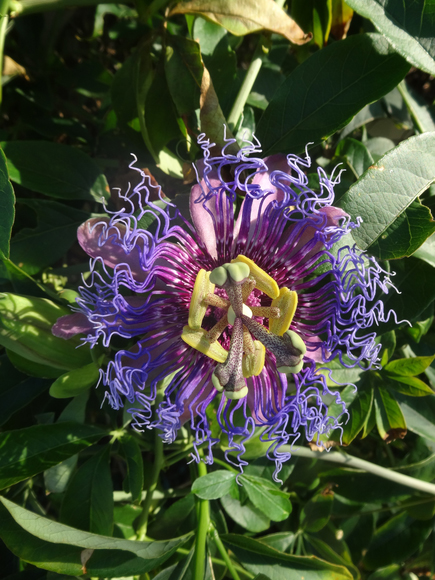
by Devon Higginbotham / Poem by Donna Bollenbach Suncoast Native Plant Society The Passionflower...it looks like it must be from another planet. _D Higginbotham The first time I saw a passion flower, with its bizarre, lavender zigzaggy petals and yellow-star stamens, my immediate thought was it must be from another planet. It looks like no other flower shape — daisy, tulip or rose. Not only is it spectacular to behold but it’s huge, measuring about 4 inches across, and it smells like a sorority house on formal night. I had to have one! Sometimes called the maypop or May apple, this perennial vine is native to Florida and the southeastern United States. It grows well in zones seven to 10, climbing on fences trellises or as a ground cover in sunny locations. It spreads underground, sending out shoots some distance from the parent plant. It is attractive to zebra longwing and gulf fritillary larvae, which keep it in check. Thus, supplying your garden with a steady ...