Posts

Showing posts with the label endangered plant

Nature in Broward: The Silent Crisis of Local Rare Species Extinction

Image
Nature in Broward:  The Silent Crisis of Local Rare Species Extinction by Richard Brownscombe A recent review of vegetation maps and firsthand knowledge of Broward natural areas reveals that less than 3.5% of metropolitan land remains for nature. Some ecosystems, such as Scrub, Pine Flatwoods, and Wet Prairie, are now 1% of their size in 1943. Late conservation efforts enabled by Preservation 2000 and Forever Florida gave us a patchwork of small, isolated preserves. Each is important and valuable as a last remnant of a unique subtropical ecosystem. Some have an evolutionary history tens of thousands of years old. Five hundred plant species are living in these metropolitan parks and preserves. By comparison, two hundred plant species live in the large western wetlands, the Everglades Wildlife Management Areas. Therefore, our greatest biodiversity is within metropolitan Broward. Largeflower false-rosemary,  Conradina grandiflora , is endemic to sc...

Citizens to the Rescue!

Image
Members of the Florida Native Plant Society (FNPS) have sure been busy this hurricane season – rescuing Florida native plant communities – some from the hurricanes but mostly from the bulldozers! From the Panhandle to south Florida, FNPS and our partners have been racing to rescue native plants, and plant communities. As of October 23rd, we have rescued 1,000s of plants in the Panhandle, countless rare Tillandsias in south Florida, and in central Florida more than 3,200 plants from a rare Sandhill parcel with many more collection days still ahead of us. Words cannot adequately express how grateful we are for the outpouring of financial and volunteer support from our members, concerned citizens, and our conservation partners. There are so many to thank and not enough room for here for everyone’s name, but let’s start: our 81 generous financial donors, our 100+ volunteers, and our partners from Oakland Nature Preserve, St. Marks National Wildlife Refuge, Koreshan State Historic Sit...

Wednesday's Wildflower: Wiregrass Gentian

Image
Gentiana pennelliana  Submitted by Kitty Loftin , Sarracenia Chapter Genus: Gentiana Species: Gentiana pennelliana Fernald Family: Gentianaceae Common name: Wiregrass gentian Photo by Kitty Loftin, Sopchoppy, Florida Wiregrass gentian is a small, rare perennial plant of moist to wet flatwoods and savannas.   It is an endemic species, restricted in distribution to nine counties in the Florida panhandle.  It needs to have sunlight for growth and for the flowers to open. It is often found growing with wiregrass, thus the common name.  The 1 1/2 to 2 1/2-inch-long flowers are borne singly or in pairs at the tip of the stem.  They are white inside and white suffused with purple outside. They bloom in winter,  typically  December-January  It's threatened by habitat loss, fire suppression, and is listed as endangered.   The genus Gentiana is named after Gentius, a 6th century King of Illyria, who used the roots of the...

X Marks the Spot: The Search for the Celestial Lily

Image
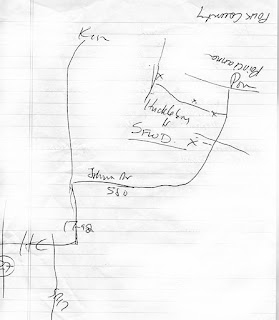
submitted by Donna Bollenbach, Suncoast Chapter (originally printed in The Grapevine, the Suncoast Chapter's  monthly newsletter) The Map The Map Back in October, I ran into a friend at a native plant talk. He enthusiastically told me about a colony of Celestial Lilies, Nemastylis floridana , that were blooming in central Florida, and hastily drew me a map to locate the beautiful and endangered wildflowers. The map was very rough, so I tried to ask questions, but the talk we were both attending started, and I was left with this somewhat cryptic diagram. In any case, that weekend my husband, Bob, and I decided we were going to try find the spot, and invited a few unsuspecting friends for the hunt. I first tried to see Celestial Lilies at Kissimmee Prairie Preserve. It was late fall, a little pass their peak blooming time, and all we found was one bud. With at least six pairs of eyes staring at it, it did not open. I should also say that Celestial Lilies are unusual in ...

Where Have All the Pygmy Pipes Gone?

Image
By Carmel van Hoek I haven’t heard any mention of pygmy pipes in quite a while, and the last collections, according to the USF Plant Atlas , were made in 2012 in Pasco and St. Johns Counties. I wonder if these little endemic, state endangered obscurities are taking another sabbatical as they have sometimes done since the late 1800’s when they were first discovered. Photograph by Betty Wargo. Courtesy of The Atlas of Florida Plants Photograph by Rita Lassiter . Courtesy of  The Atlas of Florida Plants In December of 1884, in east Florida near St. Augustine, Mary C. Reynolds found several small plants that obviously lacked chlorophyll as they displayed no hint of green. They looked somewhat like Indian Pipes, Monotropa uniflora, except that these plants were smaller, some barely visible above the leaf litter. And they were suffused with colors of pink and pale lavender instead of being ghostly white. Instead of a single flower atop the stem as in Indian Pipes, these ...