Posts

Showing posts with the label Tom Palmer

Wednesday's Wildflower: Star Anise & Florida Anise

Image
Illicium spp., Anise submitted by Tom Palmer, Heartland Chapter Florida has two native species of anise that look quite different and are found in very different regions of the state. Both bloom in spring. Star Anise Star Anise,  Illicium parviflorum ,   Photo by Tom Palmer The Yellow Anise Tree/Star  Anise, Illicium parviflorum , is found in hydric hammocks in a handful of Central Florida counties from Marion to Polk. It reportedly once occurred in Georgia, but has been extirpated. While classified as endangered in Florida, it is locally common in places such as the Marion Creek Basin in northeast Polk County.The type specimen was collected in 1799 in Marion County.
Wednesday's Wildflower: Scrub Lupine

Image
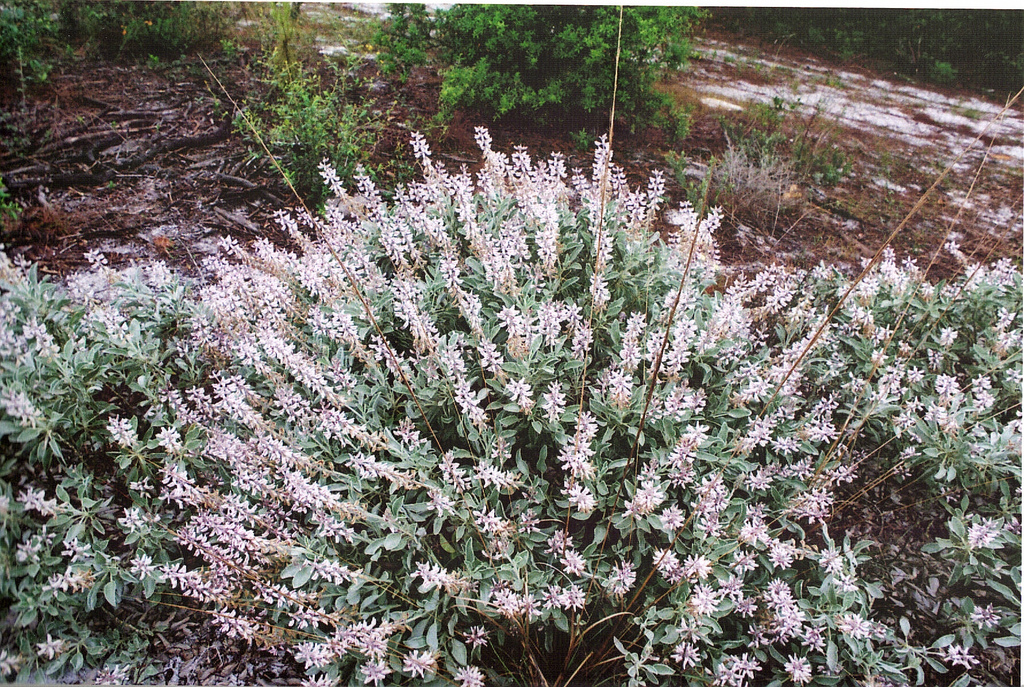
McFarlin’s Lupine/Scrub Lupine,  Lupinus westianus var. aridorum / Lupinus aridorium Submitted by Tom Palmer, Hernando Chapter Scrub Lupine, photo by Tom Palmer This pink-flowered endemic wildflower blooms in spring in a decreasing number of locations on the Winter Haven and Mt. Dora ridges in Polk and  Orange counties.  It is a federally listed endangered species, and unlike many scrub species, it is  unknown within the Lake Wales Ridge.  Although this plant was first proposed to be considered a separate species by James Brigham McFarlin in the 1930s, it was not formally described until 1982 by John Beckner. It was later reclassified as a variety of Lupinus westianus by Duane Isley, but a current genetic evaluation of Florida lupines reportedly may result in changes in the nomenclature that may restore it to full species status. Scrub lupines are easily identified by pink blossoms as well as the absence of stipules, which will L. diffusus...

Jack-in-the-Pulpit, Arisaema triphyllum

Image
Submitted by Tom Palmer, Hernando Chapter . Edited by Valerie Anderson Jack-in-the-Pulpit, photo by Tom Palmer Jack-in-the-Pulpit ( Arisaema triphyllum ) emerges in floodplain forests in most of Florida at the beginning of spring. The plant’s Latin name refers to its three prominent leaves that spread above the spathe that is the “pulpit” from which the common name (also known as Parson-in-the-Pulpit) derives. Purple splotched spathe. Photo by Tom Palmer The spathe ranges from green to purple. The plant also includes a cluster of red berries that ripen later in the year. This plant is widespread, growing all over the Eastern United States and as far north as Nova Scotia. However the plant is not uniformly distributed and sometimes may be absent or infrequent in suitable habitat. Arisaema triphyllum was once divided into two species ( A. triphyllum and A. acuminatum ) based on morphological differences described by Small and others. It was originally desc...

Wednesday's Wildflower: Blackberries

Image
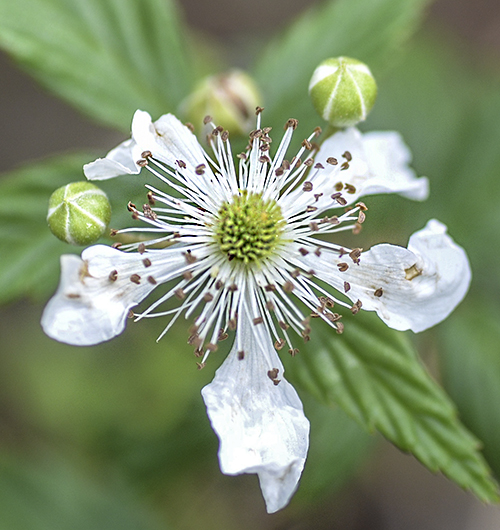
Native Blackberries, Rubus spp.  Submitted by Tom Palmer, Hernando Chapter Blackberry Flower, Rubus spp. Tom Palmer, Hernando Chapter The lovely white blooms of Florida’s various species of native blackberries (Rubus sp.) in late winter and early spring offer plenty of food for wildlife ranging from Florida black bears to songbirds in late spring. Bee visiting a Dewberry Flower, Photo by Donna Bollenbach The flowers attract bees and other pollinators. Wild Blackberries photo by Donna Bollenbach Blackberries are common in dense thorny patches along roadsides and in natural areas throughout north and central Florida. The fruit is composed of drupelets that vary in the sizes of the drupelets and the size of the fruits. Although fruiting in central Florida typically occurs in late May or early June, I have observed some fruiting as early as late March. For people, the flowers offer the promise of cobblers and pies at Fourth of July pic...