Posts

Showing posts with the label American beautyberry

Do the Right Thing: Plant Natives

Image
By Donna Bollenbach When the concept of recycling first came up in my community I knew it was the right thing to do, but it meant that I had to spend more time sorting the trash, nagging my husband and children to put items in the right bins, and carry more containers down to the curb. We weren’t perfect at first, but like changing any habit, it took practice and commitment. Now our recycle bin fills up far faster than our garbage bin, and I feel good that I am doing the right thing. I even encourage others to recycle. Inherently, I feel most people want to do the right thing. But like my commitment to recycling, doing the right thing oftentimes requires us to break old habits, which is not easy. But once we make the change, we usually feel good about it. Sometimes we even convince others to change as well. That’s what I’m hoping to do with you right now, but this change isn’t about recycling, it’s about planting native . Floridians are in love with exotic plant...
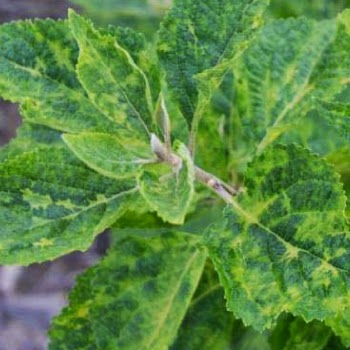
Cucumber Mosaic Virus (CMV): A Growing Problem for American Beautyberry (Callicarpa americana)

Image
  Leaf mottling, late December Introduction Leaf mottling and wilting, late June. Photo by Tom Becker. Defoliated stem tip with emerging new growth Leaf mottling, Mid July mid July Plant diseases are caused by bacteria, fungi, or viruses. Those caused by viruses are the most difficult to diagnose. Symptoms are often quite subtle, and easily confused with nutrient deficiencies and herbicide injuries. Viral plant diseases are most often transmitted by insect vectors or by infected pruning tools. Once infected, a plant cannot be cured of diseases caused by viruses. Results of Plant Analysis In November 2011, American beautyberries (Callicarpa americana) exhibiting leaf distortion, mottling, and slowed growth were reported to Lee County Extension. Leaf samples were collected from the affected plants and sent to the Plant Disease Clinic at the University of Florida, Gainesville. The sample tested positive for cucumber mosaic virus (CMV) with the Agdia Immunostrip Ki...

Grass-free and Deed-Restricted: An Impossible Dream?

Image
 An impossible dream in an HOA-controlled community? Pam Brown's front yard In Pinellas County.  by Nanette O’Hara I hear it all the time. Folks who live in deed-restricted communities tell me they can’t remove even a blade of grass from their front yard for fear of recrimination from their evil HOAs. But is this really the case? Probably not. I think acceptance of “non-traditional” landscapes depends largely on how you deliver your pitch, and the effort you put into making your case for an alternative to the typical turfgrass-dominated yard with a couple of scraggly palm trees and a neatly manicured hedge of shrubs along the front of the house. State laws enacted in recent years make it clear that HOAs cannot prevent homeowners from implementing Florida-Friendly landscapes. Many homeowner associations may not be aware of this (especially if no one has bothered to inform them about it), and still more are unclear about what a “Florida Yard” looks like. They fear, unders...

American Beautyberry: Purple Now

Image
Callicarpa Americana American Beautyberry                                                                Verbenacea Other Names: Dwarf Mulberry, Beautybush, Filigree, French Mulberry, Beautyberry Introduction: Purple berries clinging around stems with bright green foliage make Callicarpa americana stand out from late summer to winter. It is easy to see how beautyberry got its common name. Don’t let its looks fool you though; Callicarpa is more than just eye candy. Callicarpa americana is useful medicinally and as food for wildlife and people. American Beautyberry is not fussy about location, soil or light requirements. This tough plant is an American Beauty in every sens...