Posts

Showing posts with the label Polyphemus moth

National Moth Week 2023 - The Polyphemus Moth
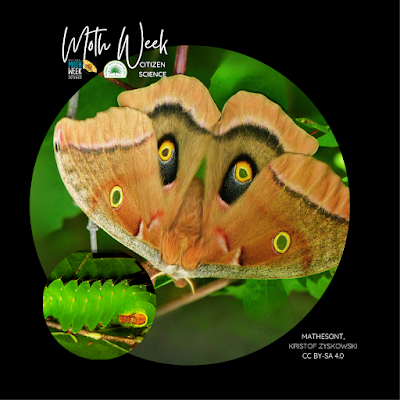
Image
The Polyphemus moth, scientifically known as Antheraea polyphemus , is a North American member of the family Saturniidae, as known as the giant silk moths. It is a tan-colored moth, with an average wingspan of 15 cm (6 in). The most notable feature of the moth is its large, purplish eyespots on its two hindwings. The center of the eyespots are transparent. These famous eyespots give it its name– from the Greek myth of the cyclops Polyphemus. Though part of the Saturniids much like the Imperial moth, Antheraea’s lineage is different. They come from the subfamily Saturniinae (the Imperial’s is Ceratocampinae, or the royal moths) and specifically the Saturniini tribe. Antheraeas form the tussar silk genus- a wild type of silk that has commercial value especially from its Asian representatives. This North American moth has a widespread range all over subarctic Canada and the United States. The caterpillar is renowned for its insatiable appetite and can eat 86,000 times its weight at emerge...

National Moth Week: Polyphemus Moth (Antheraea polyphemus)

Image
Polyphemus Moth ( Antheraea polyphemus ) © Laura Bennett-Kimble Fun fact: Unlike butterflies, moths have fancy, feathery antennae — what the Xerces Society described as “the most flamboyant in the pollinator world.” A species that exemplifies that characteristic is the burly Polyphemus moth. Along with the Luna moth, the Polyphemus is one of the larger North American moths, with wingspans varying from 3.5 inches to more than 5.5 inches. Named after the one-eyed giant of Greek mythology, the Polyphemus displays a distinct eyespot on the top of each hind wing. Also like the Luna, the Polyphemus does not eat as an adult and prefers hanging out in deciduous forests, although it can be seen in suburbia if the right trees are present. Polyphemus caterpillars enjoy munching the leaves of numerous tree species, including Florida’s oaks (Quercus sp.). Adults emerge from cocoons such as the one shown here, and, according to Butterflies and Moths of North America , mate soon...