Posts

THEY are the Champions

Image
Although it was not a national champ, this bald cypress (nicknamed "The Senator") was the largest native tree in FL until it was destroyed in 2012. It stood 118' tall, measured 425" in circumference, and its crown spread over an average of 57'. by Laurie Sheldon In the Beginning American Forests magazine has maintained a list of the biggest trees of each species in America since 1940. It began as the "American Big Trees Report," was re-titled the "Social Register of Big Trees" in 1961, and in 1978 it became the "National Register of Big Trees" - a publication in which more than 750 champions are crowned each year. To see the most current edition, click here . The Big Tree Program is active throughout the U.S., and its message has been the same for over 70 years: regardless of size, all trees are champions of the environment. Its goal is to preserve and promote the iconic stature of our country's living monarchs (its remar...
Life in the Slow Lane: A Profile of the Gopher Tortoise

Image
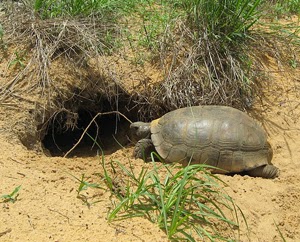
By Laurie Sheldon Gopher tortoise entering burrow; photo by Gary Foster. Joseph Butler, a U.N.F. Biology Professor and herpetologist, was a guest speaker at one of  the Ixia chapter's recent meetings. He hoped to study snakes when he moved to Florida, but found that they were hard to pin down, so to speak. He turned his attention to Gopher Tortoises, which proved to be a much more reliable subject to study, as they live long lives (50 years +) and there are over 400 burrows on campus.The gopher tortoise is federally protected as a threatened species except in Florida, where it is listed as a Species of Special Concern by the Florida Fish and Wildlife Conservation Commission. Gopher tortoises ( Gopherus polyphemus ) are native reptiles that can be found throughout the southeastern U.S.. They prefer sandhill communities, which are typified by longleaf pines and turkey oaks growing in loose, sandy soil. Much of the longleaf pine in Florida has been replaced with slash pine, wh...

F.N.P.S. Board Retreat #2, August 2013

Image
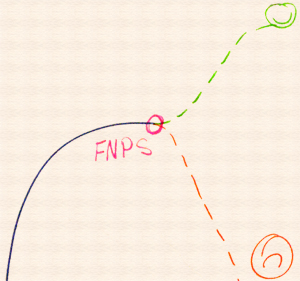
By Laurie Sheldon The Bristol Strategy Group's diagram of F.N.P.S. at a point where changes need to be made in order to insure the  organization's future growth. On August 11, 2013, the F.N.P.S. Board of Directors, along with Rebecca Staton-Reinstein and Ellen Bristol of the Bristol Strategy Group, attended a two day retreat at Jonathan Dickinson State Park. A typical B.O.D. meeting was held first thing Saturday morning. After that, we were all subject to Rebecca and Ellen's poking and prodding. These two women were hired to help F.N.P.S. actualize its potential. It was the second Strategic Planning Event they were facilitators for. I was not at the first one (held in February 2013), but Ginny Stibolt was, and she wrote the following blog about it:  2013 FNPS Board Retreat . They felt that, given the way that the organization currently operates, it has maxed out on its potential for expansion and development. Further, they suggested that the only way for us to cont...

Florida Native Plant Communities

Image
Do you know Florida's native plant communities? Have you ever wondered what the heck a scrubby flatwoods is or what the difference is between a slough and a wet prairie? Well, wonder no more! The FNPS website includes a Native Plant Communities page with all of Florida's complex ecosystems explained and illustrated by photos. The communities are organized into 13 broad categories: Xeric Uplands, Dry Mesic Uplands, Mesic Uplands, Wet Flatlands, Seepage Wetlands, Moving Water Wetlands, Floodplain Wetlands, Basin Wetlands, Rocklands, Coastal Uplands, Coastal Wetlands, Flowing Water Systems, and Lakes & Ponds. There are two or more specific communities under each broad category. Isn't Florida amazing? Why is it important to be familiar with all this? Whether you are just planting natives in your yard or working on a true restoration project, it's important to know what is likely to have been there 500 years ago.  Knowing Florida's native plant commun...

The Importance of Native Plants, Part 2

Image
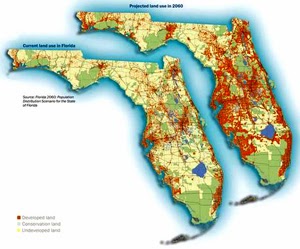
The following article, which features Dr. Doug Tallamy's book, Bringing Nature Home , was submitted by Karina Veaudry, FNPS Landscape Committee Chair. Excerpts of Tallamy’s original text were reprinted with his permission. For part 1 of the article, click HERE . Landuse in Florida today and predictions for 2060; the rust color depicts developed land, green is conservation and yellow is undeveloped. Your Role in Building Biological Corridors: Networks for Life Throughout the U.S., we have fragmented the habitats that support biodiversity by the way we have landscaped our cities, suburbs, and farmland. This is a problem because isolated habitats cannot sustain themselves or support populations large enough to survive normal environmental stresses. We can reconnect viable habitats by expanding existing greenways, building riparian corridors, and by changing the landscaping paradigm that dominates our yards and corporate landscapes. Replacing half of our lawns (areas that are e...

The Importance of Native Plants, Part 1

Image
The following article features Dr. Doug Tallamy's book, Bringing Nature Home , was submitted by Karina Veaudry, FNPS Landscape Committee Chair. Excerpts of Tallamy’s original text were reprinted with his permission. The Need to Plant Natives in (sub)Urban Landscapes As development and subsequent habitat destruction accelerate, there are increasing pressures on wildlife populations. But there is an important and simple step toward reversing this alarming trend: Everyone with access to a patch of earth can make a significant contribution toward sustaining biodiversity. There is an unbreakable link between native plant species and native wildlife - native insects cannot, or will not, eat non-native plants. When native plants disappear, so do native insects; subsequently, the food source for birds and other animals is dramatically reduced. In many parts of the United States, habitat destruction has been so extensive that local wildlife populations have entered a state of crisis and ...

F.N.P.S.: A Science-based Organization

Image
(top) Student recording data for a restoration project funded in part by FNPS Conservation grants. (bottom) The project focus: Harrisia fragrans , a rare, night-blooming native cactus. Photos by Jon Moore. by Juliet Rynear, Conservation Committee Chair Whenever I hear a F.N.P.S. member say, "landscaping has nothing to do with science," or, "nothing to do with policy," I cringe in horror. The reality of our organization is that there is science behind science has everything we do, every policy we draft, and every function we perform. If the words "science" or "scientist" intimidate you, then it's time for a reality check. We all utilize and apply science on a daily basis, often without our conscious awareness. Even if your primary interest is landscaping with native plants, please realize that horticulture is a science and landscaping is an applied science. Successfully growing and landscaping with native plants requires k...