Posts

Recordings from the 39th Annual Conference
Image
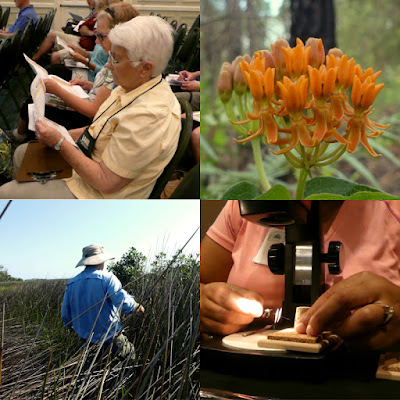
We recorded some of the sessions for the 39th Annual Conference in Crystal River from May 16-19, 2019. For more information, see the conference website and photo album . Clockwise from top left: Peggy Lanz works on a garden plan in the Landscaping for Pollinators Workshop, Rolf's Milkweed ( Asclepias tuberosa var. rolfsii ) in the Citrus Tract Sunday Field Trip , Anna Pepper works a microscope to identify a native bee, and following Dr. Jack Putz through the marsh during the Gulf Coast Ecosystems and Sea Level Rise Field Trip .  Keynotes Rising Seas, Retreating Forests, and other Rapid Changes in Coastal Ecosystems by Jack Putz, PhD Download the audio (mp3) file here and watch the video here . Florida Regional Landscape Conservation Obstacles and Opportunities by Tom Hoctor, PhD Download the audio (mp3) file here . Why is Florida So Rich in Biodiversity? by Reed Noss, PhD Download the audio (mp3) file here . Sessions How to Lead the Best F...
Protecting native plants nationally with USDA-NRCS

Image
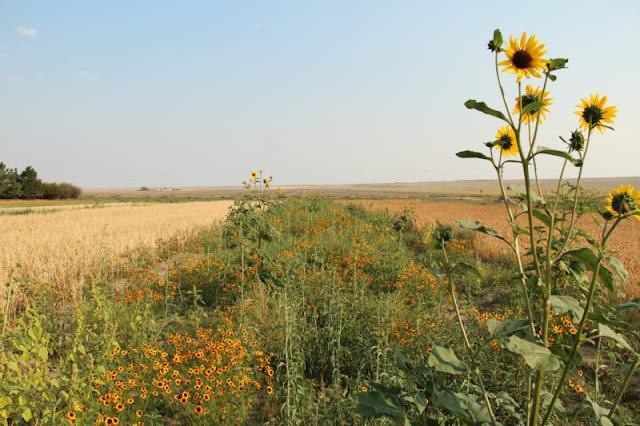
by Eugene Kelly, Policy and Legislation Chair A conservation buffer with native plants, photo by Jennifer Hopwood, Xerces Society The Society recently had an opportunity to speak in support of native plants on a national basis. The USDA’s Natural Resource Conservation Service (NRCS) accepted comments on the Practice Standards they use while implementing Farm Bill [ wikipedia ] programs. Landowners can apply for funding assistance – typically on a cost-share basis – to make changes to their agricultural practices that achieve a variety of conservation benefits. The general substance or goal of a particular Practice Standard can often be surmised from the title. Examples of Practice Standards promoted by NRCS include Field Border , Forest Stand Improvement , Hedgerow Planting , Streambank and Shoreline Protection , and Upland Wildlife Habitat Management . And the conservation benefits of the practices are aligned with such Farm Bill objectives as reducing ...

SB 82 - The Front Yard Veggie Garden Bill has passed

by Bonnie Basham, President of Sarracenia Chapter Senate Bill 82 , which prohibits local governments from regulating whether a homeowner can have a veggie, herb, or fruit garden in their front yard, has passed the legislature. All bills filed for consideration by the House and Senate, have unique folders which contain the history of that bill as it travels through the process. The front of SB 82’s folder will be signed by the House Speaker and Senate President and then presented to the Governor for his signature. If the bill is signed and presented to the Governor by Saturday, May 4 the Governor will have 7 days to sign it, veto it or allow it to become law without his signature. However, if the bill is signed by the presiding officers after May 4, the Governor will have 15 days to sign, veto or allow it to become law without his signature. Because several hundred bills are passed the last 10 days of session, some bills may not reach the Governor’s desk until June 15. This is because...

Warty Sedge, Carex verrucosa

Image
Warty Sedge, Carex verrucosa Warty Sedge, Carex verrucosa . Ralph E. Simmons State Forest, Nassau County. Photo CC BY-NC ericpo1 Don't be turned off by the ugly name, Warty Sedge ( Carex verrucosa ) is a chunky sedge that defies the stereotypes that sedges are all small, green, boring, and indistinguishable. It has seriously spiky inflorescences and seedheads that are striking in the field. It doesn't have any other common names that I'm aware of, so that makes things easy. Warty Sedge, Carex verrucosa . Watson Island State Forest, St. Johns County. Photo CC BY-NC ericpo1 Flowering Warty Sedge, Carex verrucosa , Avon Park Air Force Range, Polk County, FL. Photo CC BY-NC Edwin Bridges C. glaucescens was described in 1817 by botanist Gotthilf Muhlenberg, for whom the genus Muhlenbergia is named (the very common landscape grass Hairawn Muhly, M. capillaris , is a member of that genus) 2,3 .  It is vouchered for 45 out of the 67 count...

Clustered Sedge, Carex glaucescens

Image
Clustered Sedge, Carex glaucescens Fruiting Clustered Sedge, Carex glaucescens . Black Creek Ravines, Clay County. Photo CC BY-NC ericpo1 Clustered Sedge ( Carex glaucesens ) is another sedge, like the previously profiled False Hop Sedge , that defies the stereotypes that sedges are all small, green, boring, and indistinguishable. Also known as Southern Waxy Sedge, is an wet understory sedge of the Southeastern US but doesn't go far south into Central Florida 1 . It's restricted to the panhandle, Northeast Florida, and Lake County. Clustered Sedge, Carex glaucescens . Photo © Shirley Denton C. glaucescens was described in 1824 by botanist Stephen Elliot 2 .  It is vouchered for 26 out of the 67 counties in Florida. Clustered Sedge, Carex glaucescens Photo © Shirley Denton Clustered Sedge is within the Glaucescentes section of the Carex genus 3 , which mean that it is closely related to other chunky-fruited Florida sedges: Cypress S...

Skyblue Lupine, Lupinus diffusus

Image
Skyblue Lupine's flowers are fading in Central Florida and the fuzzy seed pods are becoming prominent yet this amazing pollinator plant is in peak bloom in North Florida. Just like the White Wild Indigo profiled last week, Skyblue Lupine is a legume, meaning it associates with nitrogen-fixing bacteria and has a certain "beany" flower shape. Skyblue Lupine, Lupinus diffusus flowering and fruiting in Split Oak Forest March 17th, 2019. Photo © Tayler Figueroa . Skyblue lupine has a long, sensitive taproot and likes dry soils, so is found in sandhills , scrubs , openings in xeric hammocks , and dry flatwoods . It is very difficult to transplant and grow from seed so it is not available from nurseries for your home landscape or for restoration. It's leaves are eaten by the Frosted Elfin ( Callophyris irus ) butterfly, which is Listed Endangered in Florida 1 . It's also eaten by Grey Hairstreak ( Strymon melinis ) larvae, Genista Broom Moth ( Uresiphita ...

False Hop Sedge, Carex lupuliformis

Image
False Hop Sedge ( Carex lupuliformis ) is now blooming. This species is often found in floodplain forests and wetlands of Florida throughout the Eastern US all the way to Eastern Canada 1,2 . Members of the Carex genus (sometimes called Carices) have interesting flowers that are often overlooked. False Hop Sedge has both male and female inflorescences, as visible in the following photo. Flowering False Hop Sedge, Carex lupuliformis . Photo by A. Murray © University of Florida C. lupuliformis was described in 1848 by physician-botanist Henry Sartwell 3 and was published in 1850 by botanist and anti-slavery activist Chester Dewey 4 .  It is vouchered for 46 out of the 67 counties in Florida. Fruiting False Hop Sedge, Carex lupuliformis . Photo CC BY-NC-SA Mary Keim . Along the Econlockhatchee River at the Econlockhatchee Sandhills Conservation Area . April 2013. It has been documented in iNaturalist along Arbuckle Creek, the Myakka River, the Econlockhatchee R...