Posts

Royal Ferns Make Regal Garden Plants

Image
By Jeff Nurge of Native Choice Nursery Royal fern With the exception of Hawaii, Florida has more native ferns than any other state in the Union. There are approximately 130 species of fern native to Florida, of which only a handful are in widespread cultivation. Thankfully the royal fern, Osmunda regalis var. spectabilis , is one of them. Form The royal fern can reach a striking three to four feet high. From his book A Gardener's Guide to Florida Native Plants , author, Rufino Osorio writes, "with age, royal ferns assume a stunning architectural quality. The long, erect fronds are finely divided and this results in a surprisingly delicate effect for so large a plant." Among the fronds are spore stalks (a.k.a. "fiddleheads") that run from green to a rusty brown, which are set off quite nicely by the evergreen foliage. This perennial fern also forms a trunk-like rhizome as it ages, which gives it a solidly regal appearance i...

Weekend at Welaka

Image
by Debra L. Klein, Education Chair I attended the FNPS Natural History Workshop November 8, 9 and 10, 2002 organized by Maria Minno at Welaka State Forest located in southwestern Putnam County near the St. John’s River. Approximately fifty children and adults of all ages attended. Gourmet food was prepared by Renee, mostly vegetarian and delicious. I arrived Friday afternoon and set up my tent near the stables about three quarters of a mile from the entrance. New camp sites had been installed, including picnic tables, a fire pit, chopped fire wood and a grill. Other participants began to arrive... most chose to stay in the bunk houses. There were many fabulous workshops offered, including topics like wildlife, plants, aquatic invertebrates, fungi hunting, butterflies and herpetology, from which participants selected four to fill their schedules for the weekend. Although I was a novice with no scientific background, most of the participants were scientists, naturalists or teachers....

Firebush, Hamelia patens

Image
By Peg Lindsay Something unusual has been happening in our garden this summer. All summer long we’ve had a hummingbird visitor in our garden. The rangemaps for Ruby-throated Hummingbirds show central Florida as the southern limit of its breeding range. So, while our area is within the summer range, most of the birds of this species nest further north and we see them only in migration (spring and fall). Juvenile male Ruby-throated Hummingbird nectaring on firebush What brings this little visitor to our garden are the abundance and varieties of nectar-producing Florida-native wildflowers we have added to our landscape. The hummer’s favorites:    - Lonicera sempervirens , coral honeysuckle (a vine)    - Salvia coccinea , tropical sage (a self-seeding annual)    - Hamelia patens , firebush (a shrub) The first year that we had a hummingbird visitor, I quickly put out the hummingbird feeder. The birdie sipped once and then went back to the firebush, n...

Resurrection Fern

Image
Top: Barking Treefrog Bottom: Green Treefrog by Peg Lindsay The rainy season has returned. Maybe our drought is over. In my part of the state, lakes have risen a foot in just two weeks, although they are still well below historic levels. In the evenings following a deluge, I enjoy listening to the exceptionally loud chorus of froggies in the treetops, especially the Barking Treefrog ( Hyla gratiosa ) and the Green Treefrog ( Hyla cinerea ). Not only are they music to my ears, but my plants like them too - they consume a hearty share of beetles and their kin, which we seem to have an abundance of in Florida. Dry resurrection fern Another remarkable phenomenon occurs after a heavy rain. The seemingly dead plant known as resurrection fern , Pleopeltis (formerly Polypodium ) polypodioides var. michauxiana , absorbs water, unfurls and turns emerald green. This little epiphyte is typically found growing on either the limbs of our native live oak ( Quercus virginiana ) or in the ...

Watersheds, Wetlands, Buffers and the Law

Image
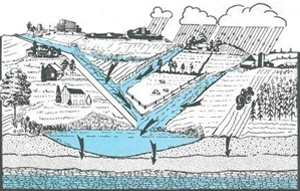
By Peg Lindsay Water flows downhill across parking lots, farms, and yards into reservoirs including ground water aquifers. Image credit: Northwest Florida WMD A watershed (also known as a drainage basin) is a land area that funnels the water that enters it into a common waterbody. Networks of retention/detention ponds, canals and culverts throughout our communities help to facilitate this process. Florida has 29 major watersheds . Most everything you put on your lawn can end up polluting your watershed. That is why a buffering system is so important. Wetland buffers protect the watershed by filtering run-off, protecting water quality, preserving fish and wildlife habitat and also preserving the aesthetic values of the natural watercourse and wetlands areas. Late summer algae blooms can be attributed to excess nutrients (often from fertilizers) in the water. (For more on your local watershed, check out this interactive map .) The littoral zone , the boundary area between the...

Earth Jurisprudence

Image
by Laurie Sheldon Sister Pat Siemen was driving through North Carolina when she popped a Thomas Berry audio book into the cassette deck of her car. The Dominican Sister and attorney was already an advocate of voting rights for the underrepresented and voiceless, so it’s no wonder that a huge lightbulb flashed over her head when the narrator read, "I suspect that if we had an earth governance and every species got to vote, they would vote humans off the planet." Her perception of the rights of nature within the context of the law changed forever on that day - a fact we should all be grateful for. Sister Pat went on to apply her Juris Doctor in the classroom, encouraging Earth literacy as the director of the Earth Ethics Institute at Miami Dade College. She currently heads the Center for Earth Jurisprudence at Barry University's School of Law. Sister Pat Siemen As a speaker at the 2013 F.N.P.S. Conference in May, her presentation began with an introduction to Ea...

Florida's Water and Land Legacy Campaign Goes Digital

Image
Most of you know all about Florida's Water and Land Legacy Campaign. In brief, the goal of the Campaign is to place an amendment to Florida's Constitution on the November 2014 ballot. The amendment, if passed, would provide the Land Acquisition Trust Fund with 33% of the net revenue from the existing document stamp tax, which would be used for the acquisition, restoration, improvement, and management of conservation lands, fish and wildlife habitat, lands critical to our water supply and water bodies, outdoor recreation areas, etc. Why is it necessary? Since 2009, the Florida Legislature has chosen to reduce funding for conservation and restoration programs by almost 100%. This amendment would help to offset the impact of said funding decisions. From the time I was a toddler I was taught to leave any place I visited in the same (or better) condition it was in when I arrived. Shouldn't the same maxim apply with regard to our natural resources? Conservation is a moral imp...