Posts

Purplish-Blue Delights Waving in the Breeze

Image
During a recent six-mile hike in Julington-Durbin-Preserve in S.E. Jacksonville, I stopped suddenly, next to a prescribed burn area, noticing over 100 thin stemmed, six petaled bluish purple flowers swaying in the breeze.  Gathering my thoughts, the tumblers in my brain lined up to think  “Bartram’s Ixia”! Calydorea caelestina in an Endemic, Endangered Iris  that only grows in 8 counties in Zones 9a and 8b  in Northeastern Florida. This Ixia’s habitat includes wet to mesic pine flatwoods that are maintained by prescribed fires.  This short-lived perennial blooms in the spring. The flowers open early around sunrise then close within a few hours. Named after William Bartram who discovered the Ixia during his Florida travels in 1774. Blog and Photos by Ixia Chapter member Bill Berthet
Going Natural: The Importance of Home Composting for Native Plants

Image
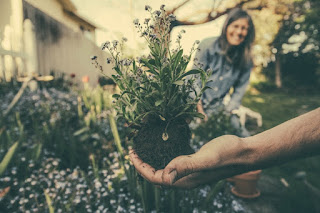
Going Natural: The Importance of Home Composting for Native Plants By Jackie Edwards Native plants aren’t by any means demanding...all they require in order to flourish is a natural environment. No need for chemical fertilizers, irrigation systems or complex programs of management. That’s great news if you’ve planted native species of Central Florida in your yard. The local climate will serve your plants well, and the soil will be matched to their requirements. However, to ensure you maintain optimum soil conditions, especially important with sandy soils typical of the Florida region, it’s a good idea to use home compost. This is the natural, environmentally-friendly way to replenish nutrients. Making environmental sense According to the EPA, 20 to 30 per cent of our waste is  organic material that should be composted . This would keep these materials out of landfills where they release methane into the atmosphere, a potent greenhouse gas that contributes to global war...

Nature in Broward: The Silent Crisis of Local Rare Species Extinction

Image
Nature in Broward:  The Silent Crisis of Local Rare Species Extinction by Richard Brownscombe A recent review of vegetation maps and firsthand knowledge of Broward natural areas reveals that less than 3.5% of metropolitan land remains for nature. Some ecosystems, such as Scrub, Pine Flatwoods, and Wet Prairie, are now 1% of their size in 1943. Late conservation efforts enabled by Preservation 2000 and Forever Florida gave us a patchwork of small, isolated preserves. Each is important and valuable as a last remnant of a unique subtropical ecosystem. Some have an evolutionary history tens of thousands of years old. Five hundred plant species are living in these metropolitan parks and preserves. By comparison, two hundred plant species live in the large western wetlands, the Everglades Wildlife Management Areas. Therefore, our greatest biodiversity is within metropolitan Broward. Largeflower false-rosemary,  Conradina grandiflora , is endemic to sc...

Citizens to the Rescue!

Image
Members of the Florida Native Plant Society (FNPS) have sure been busy this hurricane season – rescuing Florida native plant communities – some from the hurricanes but mostly from the bulldozers! From the Panhandle to south Florida, FNPS and our partners have been racing to rescue native plants, and plant communities. As of October 23rd, we have rescued 1,000s of plants in the Panhandle, countless rare Tillandsias in south Florida, and in central Florida more than 3,200 plants from a rare Sandhill parcel with many more collection days still ahead of us. Words cannot adequately express how grateful we are for the outpouring of financial and volunteer support from our members, concerned citizens, and our conservation partners. There are so many to thank and not enough room for here for everyone’s name, but let’s start: our 81 generous financial donors, our 100+ volunteers, and our partners from Oakland Nature Preserve, St. Marks National Wildlife Refuge, Koreshan State Historic Sit...

Wildflower Wednesday ~ Chapman's Blazing Star

Image
Chapman’s Blazing Star is one of 16 species of Liatris listed in the Florida Atlas of Vascular Plants. It has a patchy distribution throughout the state in scrub, sandhills and dunes  The basal rosette appears in the early spring and flowers begin to appear in late August several weeks before other blazing stars start to flower.  By early October most of the flowers of this short-lived perennial have gone to seed and the leaves have withered and turned brown. Liatris chapmanii is fairly easy to recognize because the flowers grow down stalk and are often interspersed with the upper leaves.  The stout flower stocks are usually about three feet tall.  Dense clusters of bright lavender flowers and buds cling tightly to the flower stalk. During its month of blazing glory, L. chapmanii is a magnet for butterflies and bees. Chapman’s Blazing Star is only offered for sale by a few native plant nurseries, or at native plant sales....

Summer Farewell (Dalea pinnata) - a Titan among nectar plants for NE Florida Pollinators in September and October

Image
When scheduling Butterfly Holiday trips to all parts of the world, I always leave open the months of September and October. During this time, the greatest diversity and number of butterflies and many other N.E. Florida pollinators are attracted to  flowering plants in the Genera: Carphephorus , Liatris , Dalea , Vaccinium , Dioda , Elephantopus , Bidens , Lachnanthes , and  others. Southern Dogface on Liatris pauciflora When conditions are right, in the dry pinelands and sand hill areas in Julington-Durbin Preserve, Ralph E Simmons and Jennings State Forests, acres of Summer Farewell ( Dalea pinnata ) can be in bloom attracting multitudes of butterflies and other Northeast Florida pollinators. Summer Farewell ( Dalea pinnata ) There are eight native Dalea species growing in Florida. Three are vouchered in Northeast Florida, D. carnea , D. carnea var. albida , and D. pinnata , with D. pinnata being the most common. Summer Farewell ( Dale...

Join the Pawpaw Chapter of FNPS on an exploration of Longfleaf Pine Sandhill in the Ocala National Forest

Image
All FNPS members are invited to join the Pawpaw chapter of FNPS, Saturday, October 14, 2017, for an  all-day,  driving/walking, field trip in the Ocala National Forest!   Dr. Susan Carr will guide us, as we explore 1- 3 year old, fire-managed, longleaf pine sandhill areas near Salt Springs. Dr. Susan Carr    Trip participants should wear field clothes, and bring their own lunch, as well as drinking water, insect repellent, and Florida-appropriate weather gear.   Dr. Susan Carr and David Anderson Participants should expect to travel over several miles of rough dusty forest roads. The reward of possibly spotting a fox squirrel, RCW nest trees, and of course, great understory of plant diversity in Fall bloom, makes it worth the effort!  For more details, FNPS members should contact trip coordinator, Sonya Guidry: guidry.sonya@gmail.com