Posts

2017 FNPS Conference: Connections: Above & Below

Image
submitted by Donna Bollenbach Connections:   What an all-encompassing term! It implies links, associations, bonds, assemblies, and networks. But it also refers to the way things relate and interact. So, when destiny took us to Westgate River Ranch Resort, a venue in heart of the state and the historic Everglades Watershed, choosing “Connections” for the theme of the 2017 Florida Native Plant Society seemed natural.  Historically, the Headwaters of the Everglades watershed flowed like a sheet of water that moved through grasslands and prairies to the Everglades. This flood plain filtered the water of its impurities, like the heart oxygenates blood, before delivering it to the other parts of the land body. But the natural path of water has been greatly altered resulting in water that is nutrient-contaminated and being rechanneled to our east and west coasts, causing a host of environmental problems that have a negative impact on plant communities, wildlife, our health a...

Discovering Grassy Waters Preserve

Image
Richard Brownscombe, Coontie Chapter Ilex cassine, Dahoon Holly (female)  and Taxodium ascendens, Pond Cypress Last month James Lange, Researcher and Field Biologist at Fairchild Tropical Botanic Garden, took us on a wonderful walk in Grassy Waters Preserve just an hour north of Fort Lauderdale in West Palm Beach. This wetland is an example of doing the right thing to build a sustainable urban environment. The naturally clean waters of the preserve are supplying the drinking water for West Palm Beach and helping keep the aquifer healthy. At the same time, all these wetland plant and wildlife species have a place to thrive and townsfolk have easy access to this beautiful place. The facilities of the parking lot, restrooms, picnic tables, waterside deck, canoe and kayak launch, rain shelter, benches, and boardwalk, say "Welcome. Enjoy." We were so fortunate to have "our botanist", James, along to name the plants and point out many interesting things ...

My Habitat Garden: Attracting Butterflies, Bees, Birds, and Other Forms of Life in Zone 9a

Image
By Bill Berthet, Ixia Chapter Garden pathway In the year 2000, with the help of Ron Davis (Butterfly Gardens, Jacksonville) and plants from Edith and Stephen Smith (Shady Oak Butterfly Farm, Brooker) I started to transform my newly purchased property into a Northeast Florida pollinator habitat. The many benefits of gardening include: stress-relief, moderate-intensity exercise, hand strength and dexterity (wearing gloves helps prevent fire ant bites) brain health, risk reduction for dementia, and depression and mental health. Polydamas Swallowtail with chrysalis For me, going through a nasty divorce, gardening was key in bringing more balance to my life. It’s exciting to raise butterflies in your yard. It gives one the opportunity to take witness and share the miracle of metamorphosis with others. Plus, you get a real sense of accomplishment when releasing adult butterflies, increasing their population and diversity in your area. The added bonus is their progeny will vi...

October is Florida Native Plant Month, and a great time to buy natives…

Image
by Donna Bollenbach, Suncoast Chapter Originally published in part in the Plant City Observer to promote Florida Native Plant Month and the Suncoast Native Plant Society Fall Plant Sale.   For the second year in a row, The Hillsborough County Board of Commissioners and the Mayor of Tampa have officially proclaimed October as “ Florida Native Plant Month .” The Florida Native Plant Society (FNPS) chose the month of October because, while many states have stunning displays of spring flowers, Florida’s mild climate provides for a spectacular showcase of native flowers and grasses in the fall as well. Additionally, with a slight drop in the temperature, October is the month when many Floridians escape the confines of their air-conditioned home to visit our wonderful parks and preserves, or to work in their gardens. October is also the month that the many chapters of the  Florida Native Plant Society   holds native plant sales. The Suncoas...

All questions are good questions, but can you trust the answer you find on line?

Image
 by Amanda Martin, Tarflower Chapter Where do I find reliable plant information online? What a great question. When I start thinking about planting in my landscape, I think about foliage color, density, and overall growth shape of the plant. I think a lot about flowers; flower color, flower size, flower abundance, and what time of year can I expect these flowers to emerge? Is there anything attracted to the flower color, pollen or nectar? Is there a berry or larger fruit that will come after the flower is exhausted? Can I eat these berries or larger fruit? I always have many questions, so I try to read a lot. FNPS "Native Plants for Your Area" is a great resource when looking for plants that will grow in your region.   Books, magazines, blogs, and databases are filled with so much useful information, and there are so many reliable sources for Florida gardeners and plant enthusiasts: Of course,  our own  FNPS website  section on  Native Plants f...

Letting the Light In for Rare Plants!

Image
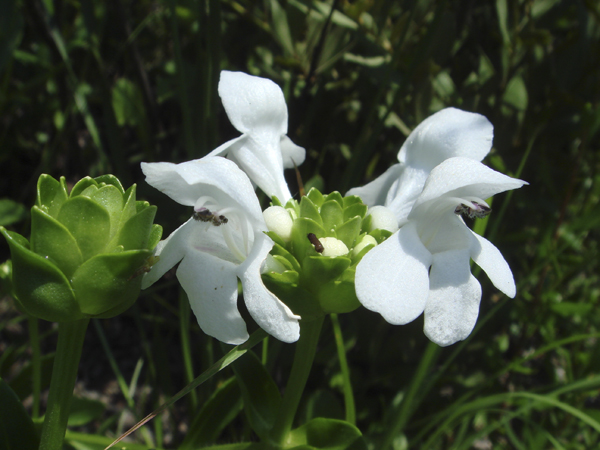
Submitted by  Michael R. Jenkins, Magnolia Chapter.  Plant Conservation Program Biologist, Florida Forest Service,  Florida Department of Agriculture and Consumer Services Sometimes sun-loving (usually pyrophytic) plant populations are in heavy competition with taller, woody plants and in need of help from an outsider. Here, someone with a pair of loppers, work clothes, water, and a few hours can really help. How about an 80% increase-in-stems kinda help? This situation was encountered where a nice population of White Birds-In-A-Nest ( Macbridea alba ) highly benefited from hand removing competing small trees and shrubs from around the plants, done to open up the habitat and to mimic fire (somewhat). This was done by one person working for just four hours. This person is the "fuel buster."  White-Birds-In-A-Nest: Macbridea alba, Mint Family, Lamiaceae G2 S2, Federal Threatened, State Endangered, Endemic to well-burned/mowed, pine dominated h...

Evil Weeds

Image
By Devon Higginbotham, Suncoast Native Plant Society (originally published in the Plant City Observer ) Spanish Needles is NOT a weed. It is native, a great pollinator plant and edible! “Is that a weed?”  That’s my sister, Candi.  She lives in one of those golf communities where the maintenance crews mow and primp everyone’s yard as well as all the common areas.  I think they allow her a 3 square foot area to “garden”. “No, that’s a Spanish Needle.  It’s a native plant that’s edible and the pollinators adore the flowers”, I replied, sounding a bit defensive.  “Oh” she replied.  She was trying to sound chipper but I knew what she really said was, “I’m not eating any weeds!” She’s my big sister which should explain everything.  Her house and yard are always spotless and manicured, whereas my yard is 15 acres in the middle of nowhere. Anywhere farther than 10 minutes from the nearest grocery store was nowhere to her.  Even her d...