A Sign of the Season: Partridge Berries
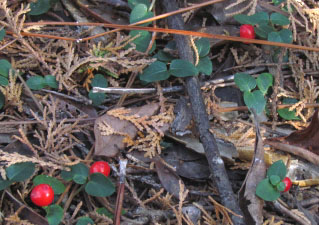
The warm Thanksgiving holiday found my family hiking the Juniper Creek Trail in the Blackwater River State Forest where I spied my favorite little greeting to the holidays, Mitchella repens. Commonly known as partridge berry, twin flower, or squaw vine, this petite, evergreen creeper sports bright red berry-like drupes which cheerfully dot the forest floor through winter.
Although not a denizen of my current garden, I have had patches in the past. Partridge berry grows in shady areas with rich, neutral to acid soil in moist to dry areas. Look for it throughout the Panhandle and as far south as central Florida. Mine was in the deep shade of a live oak in the company of shiny blueberries and ferns. I found that it grew as thick as any lawn grass when kept free of smothering oak leaves. Since the stems of partridge berry root like the runners in lawn grass, it was easy to transplant by cutting plugs or rooting cuttings.

Linnaeus gave this plant its botanical name, Mitchella repens, in honor of his friend, John Mitchell. A doctor and botanist, he developed a treatment for yellow fever and created the Mitchell map which was used to define the boundaries of the colonies. Repens describes the creeping habit of the plant. The common name, partridge berry, may leave you scratching your head since the partridge isn't native to North America. The berries are enjoyed by ruffed grouse which are similar to European partridges. Europeans also gave this dainty plant the name squaw vine when they observed a tea made from the plant being used by Native Americans to aid in childbirth. Why is Mitchella repens called twin flower? Look for pairs of white, trumpet-shaped blooms in late spring to early summer. The ovaries of the twin flowers fuse to form one red drupe. If you look closely, you can spot two dimples on the drupe where the flowers were attached.
In the past, partridge berries were collected for Christmas decorations and planted in bowls and terrariums. This impacted the populations. They are available through native plant nurseries so resist the temptation to collect wild specimens. Enjoy looking for these woodland treasures during your next walk in the woods.


Comments